Rogaine
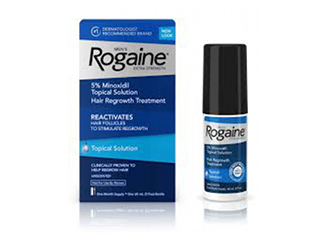
Rogaine
- In Canada, Rogaine can be purchased over the counter without a prescription at pharmacies and many retail stores, as well as from online pharmacies. It is a non-prescription product for topical use.
- Rogaine is used for androgenetic alopecia (pattern hair loss) to help slow hair loss and promote regrowth. Its active ingredient, minoxidil, works by stimulating hair follicles and prolonging the growth phase of the hair cycle; when used orally, minoxidil is a vasodilator and antihypertensive.
- The usual dosage for hair loss is 1 mL of 2% or 5% topical solution applied twice daily, or 5% foam applied twice daily (about half a capful). Use exactly as directed on the product label.
- It is available as a topical solution or topical foam. Oral minoxidil exists in tablet form, but it is prescription-only and used for hypertension, not routine hair loss treatment.
- Rogaine usually does not work immediately; visible results may begin in about 4 to 6 months of regular use.
- The effect lasts only while you keep using it. Continued daily treatment is needed to maintain results, and stopping treatment may lead to loss of newly regrown hair within a few months.
- There is no specific alcohol warning for topical Rogaine, but alcohol can worsen dizziness or low blood pressure with oral minoxidil. Avoid excessive alcohol if you are using any minoxidil product and seek medical advice if you have cardiovascular symptoms.
- The most common side effects are scalp irritation, dryness, flaking, itching, and temporary increased hair shedding at the start of treatment. Some people may also develop unwanted facial hair growth.
- Would you like to try Rogaine without a prescription?
Basic Rogaine Information
- INN (International Nonproprietary Name): Minoxidil.
- Brand names available in Canada (English): Rogaine; other minoxidil products may appear as generic minoxidil or hair regrowth treatment products.
- ATC Code: D11AX01 for hair loss treatment; C02DC01 when used systemically for hypertension.
- Forms & dosages: Topical solution 2% and 5%; topical foam 5%; oral tablets 2.5 mg and 10 mg.
- Manufacturers in Canada (English): Kenvue Brands, Perrigo, Apotex, Teva, Sun Pharma, and other international suppliers; local packagers may vary by product.
- Registration status in Canada (English): Topical minoxidil is OTC; oral minoxidil is Rx only.
- OTC / Rx classification: Topical minoxidil is generally non-prescription in Canada; oral minoxidil is prescription only.
- Standard dosages per condition: Androgenetic alopecia: 1 mL of 2% or 5% topical solution twice daily, or half a capful of foam twice daily; severe hypertension: oral minoxidil dosing is individualized.
Latest Research Highlights On Rogaine And Minoxidil
Thinking about starting Rogaine Canada, or wondering whether minoxidil for hair loss is actually worth the routine?
Recent evidence from 2022 to 2025 continues to support topical minoxidil as a standard option for androgenetic alopecia, with Canadian and international studies pointing to similar themes: steady use matters, visible regrowth takes time, and tolerability is usually good when the scalp is healthy and dosing is correct.
In Canada, that lines up well with OTC access under Health Canada oversight, while day-to-day results still depend on pharmacist counselling, affordability, and whether the patient can keep up with the twice-daily routine.
Topical minoxidil is generally available without a prescription in Canada, the UK, Australia, and the US, while oral minoxidil remains prescription-only.
| Study Type | Population | Outcome | Relevance To Canada |
|---|---|---|---|
| Clinical and real-world studies, 2022–2025 | Adults with androgenetic alopecia | Improved hair density and reduced progression with topical minoxidil | Supports common pharmacy use of minoxidil topical solution and hair regrowth products Canada |
| Comparative adherence studies | Men and women using 2% and 5% products | Foam and solution both work, but adherence is better when application feels simple | Useful for Canadian counselling where cost, routine, and bottle design affect use |
| Tolerability reports | Topical users in North America and Europe | Main issues were scalp irritation, dryness, and initial shedding | Matches what Canadian pharmacists often hear at the counter |
Data highlight: visible regrowth may take 4–6 months, and stopping treatment may reverse gains within 3–4 months.
- For most patients, consistency matters more than switching brands every few weeks.
- If a person cannot stick with the schedule, the best product is usually the one they will actually use.
Clinical Effectiveness In Canada: What Health Care Users Should Expect
People often want a simple answer: will topical minoxidil Canada actually help, and how much hair can come back?
For androgenetic alopecia, the realistic goal is maintenance first and regrowth second, especially with Rogaine 5% products used the right way.
- Androgenetic alopecia
- A common pattern of hair thinning related to genetics and hormones, usually affecting the crown or hairline.
- Maintenance treatment
- Ongoing therapy used to keep gains once hair growth has improved.
- Shedding phase
- A temporary increase in hair fall that can happen early in treatment and does not always mean failure.
Minoxidil is classified as D11AX01 for hair loss treatment, while oral minoxidil is C02DC01 for hypertension.
Canadian guidance generally supports OTC topical use, with evaluation after about 4–6 months.
Data highlight: treatment needs to continue to maintain results, because stopping can lead to loss of regrowth within a few months.
- Effectiveness depends on correct dose, healthy scalp skin, and consistent daily use.
- Pharmacists often help patients troubleshoot missed doses, irritation, and product choice based on DIN Canada listings.
Indications And Expanded Uses: Approved, Off-Label, And When Rogaine Fits
Is every kind of hair loss a good fit for minoxidil hair loss Canada products?
No, and that is where a quick assessment can save a lot of frustration.
The approved Canadian use is topical minoxidil for androgenetic alopecia in men and women.
Oral minoxidil exists, but it is Rx-only and used under specialist care, not as the standard OTC route.
| Use | Route | Monitoring Need | Canadian Reality |
|---|---|---|---|
| Approved treatment for androgenetic alopecia | Topical solution or foam | Routine follow-up after 4–6 months | Most common path for Rogaine women’s and men’s products |
| Off-label hair-loss use under specialist care | Oral minoxidil | Blood pressure and adverse-effect monitoring | Reserved for selected cases, usually by dermatology or another prescriber |
| Original antihypertensive use | Oral tablet | Close cardiovascular follow-up | Not the routine hair-loss choice |
If hair loss is sudden, patchy, painful, or linked with scalp symptoms, it may not be androgenetic alopecia at all.
That is where family physicians, dermatologists, and pharmacists may take different routes, especially in rural areas where access can be limited.
- See a clinician sooner if the hair loss is sudden or in patches.
- See a clinician sooner if there is redness, scaling, pain, or other scalp symptoms.
Composition And Brand Landscape In Canada
What is actually inside Rogaine, and why do the packages look so different from one pharmacy to the next?
The active ingredient is minoxidil, while Rogaine is the best-known brand in Canada and many other markets.
Patent expiry has led to broad generic competition, which helps affordability but also means differences in bottle size, applicators, and branding.
| Formulation Type | Strength | Typical Use |
|---|---|---|
| Topical solution | 2% | Androgenetic alopecia, often chosen when a lower-strength option is preferred |
| Topical solution | 5% | Androgenetic alopecia, common in Men’s Rogaine and generic minoxidil 5% products |
| Topical foam | 5% | Androgenetic alopecia, often selected for easier application and less mess |
Rogaine is sold in Canada, the US, UK, and EU, and minoxidil is widely available generically.
Major international suppliers include Kenvue, Perrigo, Apotex, Teva, and Sun Pharma, among others.
Bilingual labelling is common in Canadian retail packaging, especially for national distribution.
- Examples Canadian shoppers may recognise include Men’s Rogaine, Women’s Rogaine, Kirkland Minoxidil, and store brands.
- Generic products can be more affordable, but the applicator and bottle format may differ from brand to brand.
Contraindications And Special Precautions For Canadian Patients
Before starting minoxidil topical solution, it helps to know when not to use it.
- Absolute contraindications
- Allergy to minoxidil or excipients; for topical products, do not use on open wounds, sunburn, infection, or active scalp dermatoses.
- Relative contraindications
- Cardiovascular disease, scalp psoriasis or chronic skin disease, pregnancy, and breastfeeding.
Thin or inflamed scalp skin may increase absorption, so older adults and people with chronic scalp irritation need extra caution.
Oral minoxidil is reserved for severe hypertension and is not the routine hair-loss option.
Red flags: chest pain, fast heartbeat, swelling, or dizziness mean the product should be stopped and medical care sought.
- People with heart disease should be extra careful, even with topical use.
- Pregnant or breastfeeding patients should avoid use unless a clinician specifically advises otherwise.
Dosage Guidelines: How Canadians Typically Use Rogaine
How much should be applied, and how often?
The standard topical regimen is 1 mL of 2% or 5% topical solution twice daily, or half a capful of foam twice daily.
Topical minoxidil is not recommended under 18 years of age.
| Product Type | Dose | Frequency | Key Notes |
|---|---|---|---|
| 2% solution | 1 mL | Twice daily | Apply to the scalp, not the hair shaft |
| 5% solution | 1 mL | Twice daily | Commonly used in Minoxidil 5% products |
| 5% foam | Half a capful | Twice daily | Useful for patients who prefer foam over liquid |
If a dose is missed, apply it when remembered unless it is almost time for the next one.
Do not double up.
Accidental ingestion requires medical help, even though topical overdose more often causes local irritation than a severe event.
- Use on a dry scalp for better application and less dripping.
- Wash hands after application to avoid unwanted facial hair growth.
- Allow time before styling, and do not coat the scalp heavily just to “make up” a missed dose.
Interactions Overview: What To Watch For In Real Life
Topical minoxidil does not have many food or drink issues, but real life is rarely that simple.
Alcohol may indirectly worsen dizziness or scalp dryness in some users, and combining topical minoxidil with other scalp actives can irritate sensitive skin.
- Check with a pharmacist if using medicated dandruff shampoos, topical retinoids, corticosteroids, or several hair products at once.
- Check with a pharmacist if you take antihypertensives or have a heart condition, since medication review matters more with oral minoxidil.
- Check with a pharmacist if your scalp is already inflamed, flaky, or sensitive.
Cultural Perceptions And Patient Habits Across Canada
Canadian patients often look at hair loss treatment through a value-and-evidence lens.
Universal healthcare can help with diagnosis, but OTC hair regrowth products Canada shoppers buy are usually paid out of pocket.
That is why forums and Reddit-style discussions often focus on affordability, generic alternatives, and whether the early shedding means the product is “working.”
Data highlight: urban shoppers may find Rogaine at Shoppers Drug Mart, Rexall, Jean Coutu, or London Drugs, while rural patients may rely on fewer stockists or mail order.
- One common misconception is that more product means faster results.
- Another is that shedding always means harm, when it can be part of early treatment.
- Many patients compare Rogaine with Kirkland or store brands before choosing a bottle.
- Bilingual packaging matters more in Quebec and Francophone communities, where label clarity can affect confidence and correct use.
Availability And Pricing Patterns In Canada And Cross-Border Comparisons
Where should Canadian shoppers look for Rogaine price Canada comparisons?
Common retail options include Shoppers Drug Mart, Rexall, Jean Coutu, and London Drugs, plus online Canadian pharmacies.
Some people also compare US retailers, but the sticker price alone does not tell the whole story.
| Access Channel | Pricing | Practical Trade-Offs |
|---|---|---|
| Canada retail | Usually higher than US promo pricing, but predictable in Canadian dollars | Easier returns, local counselling, DIN checks, and familiar packaging |
| Online pharmacy | Often competitive, especially for generics and multi-bottle kits | Convenient delivery, but stock and brand choice can vary |
| Cross-border US purchase | May look lower at first glance | Exchange rates, shipping, customs, and returns can erase savings |
Provincial plans such as Ontario Drug Benefit, BC PharmaCare, and RAMQ generally focus on medically necessary drugs, so topical Rogaine is often an out-of-pocket purchase unless a specific plan covers it.
Checking the DIN matters when buying generics, because it helps confirm the product is the Canadian-registered one.
In our online pharmacy, rogaine is available without a prescription, with discreet delivery to Canada in 5-14 days.
- Compare the final cost, not just the shelf price.
- Check the DIN and package size before buying a generic product.
Comparable Medicines And Preferences In Canada
Should a patient choose Rogaine, generic minoxidil 5%, finasteride, or a cosmetic alternative?
The best choice depends on hair-loss pattern, comfort with a daily routine, and whether there are cardiac or skin concerns.
| Option | Pros | Cons |
|---|---|---|
| Minoxidil brands | Broadly used by men and women; topical use is OTC; many formulation choices | Needs ongoing use; can irritate the scalp |
| Finasteride | Oral option for selected men with androgenetic alopecia | Not the routine option for women; requires prescription and clinical review |
| Cosmetic alternatives | May improve the look and feel of hair with less medical commitment | Do not match the evidence base of minoxidil for hair regrowth |
Some Canadian patients prefer branded Rogaine because they trust the name or like the applicator design.
Others choose generics for price, especially when they are already comfortable with a twice-daily routine.
- Rogaine can feel more familiar for first-time users.
- Generic minoxidil can make long-term maintenance more affordable.
Frequently Asked Questions About Rogaine In Canada
How long does Rogaine take to work? Visible change may take 4–6 months, and some people notice early shedding before regrowth starts.
Can I use it with coloured hair or styling products? Yes, but it is best to apply to a dry scalp and let it absorb before styling.
What happens if I stop? Hair regrowth may fade within 3–4 months after stopping treatment.
Is it covered by provincial drug plans? Usually not, because topical Rogaine is commonly treated as an out-of-pocket OTC product.
Can I buy it without a prescription in Canada? Yes, topical minoxidil is generally non-prescription in Canada.
Guidelines For Proper Use: Pharmacist Tips For Canadian Households
Using minoxidil properly sounds simple, but a few small habits make a big difference.
- Apply to a dry scalp, not to wet hair.
- Measure the correct amount: 1 mL for solution, or half a capful for foam.
- Spread it where thinning is happening, then wash hands right away.
- Let the scalp dry before using other hair products or going to bed.
- Keep using it long term if the goal is maintenance.
- Store the bottle at room temperature, protected from moisture and heat.
| Do | Don’t |
|---|---|
| Keep the bottle tightly closed and in original packaging when travelling | Leave it open in a hot car or damp bathroom |
| Ask a pharmacist about scalp irritation, dizziness, or palpitations | Double the dose after missing an application |
| Expect gradual change over months | Stop early and expect permanent results |
People travelling between provinces or across the border should keep products in the original package, especially if carrying multiple bottles or foam.
That helps with storage, transport, and customs questions if they come up.
Delivery Across Canada (English)
| City | Region | Delivery time |
|---|---|---|
| Toronto | Ontario | 5-7 days |
| Ottawa | Ontario | 5-7 days |
| Mississauga | Ontario | 5-7 days |
| Hamilton | Ontario | 5-9 days |
| Winnipeg | Manitoba | 5-7 days |
| Calgary | Alberta | 5-7 days |
| Edmonton | Alberta | 5-7 days |
| Vancouver | British Columbia | 5-7 days |
| Victoria | British Columbia | 5-9 days |
| Halifax | Nova Scotia | 5-7 days |
| Quebec City | Quebec | 5-7 days |
| Montreal | Quebec | 5-7 days |
| St. John's | Newfoundland and Labrador | 5-9 days |
| Saskatoon | Saskatchewan | 5-9 days |
| Regina | Saskatchewan | 5-9 days |