Diamox
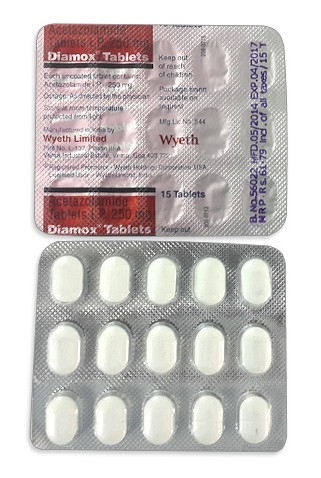
Diamox
- Diamox (acetazolamide) can be purchased from prescription pharmacies and online pharmacy services in Canada, but it is generally a prescription-only medicine. Some pharmacies may offer it without a prescription in certain situations, depending on local rules and pharmacy practice.
- Diamox is used for glaucoma, acute mountain sickness, certain types of epilepsy, edema due to heart failure or drug-induced fluid retention, and sometimes idiopathic intracranial hypertension. It is a carbonic anhydrase inhibitor that works by reducing fluid production in the eye and increasing the excretion of salt, bicarbonate, and water through the kidneys.
- The usual adult dose depends on the condition: for glaucoma, 250–1000 mg per day in divided doses; for edema, 250–375 mg once daily; for epilepsy, 250–1000 mg per day in divided doses; and for altitude sickness prevention, 125–250 mg twice daily.
- Diamox is taken by mouth as tablets or extended-release capsules; in hospital settings, an injectable form may also be used.
- Diamox usually starts working within a few hours after an oral dose, though altitude sickness prevention is best started 24–48 hours before ascent for full benefit.
- The duration of action is typically around 10–15 hours, which is why dosing is often once to several times daily depending on the indication and formulation.
- Avoid or limit alcohol while taking Diamox, as it can increase dizziness, drowsiness, dehydration, and worsen side effects, especially at high altitude.
- The most common side effects are tingling in the hands or feet, frequent urination, taste changes, fatigue, nausea, and mild stomach upset.
- Would you like to try Diamox without a prescription?
Basic Diamox Information
- INN (International Nonproprietary Name): acetazolamide
- Brand Names Available in Canada (English): Diamox; generic acetazolamide is also commonly dispensed
- ATC Code: S01EC01
- Forms & Dosages: oral tablets are the main retail form; the classic strength is 250 mg, and extended-release 500 mg capsules are recognised internationally
- Manufacturers in Canada (English): not specified
- Registration Status in Canada (English): prescription-only medicine
- OTC / Rx Classification: prescription only
Latest Research Highlights: What 2022–2025 Evidence Says About Diamox In Canada And Abroad
What has changed in the last few years, and does it matter for Canadian patients?
Recent evidence still supports acetazolamide as a useful carbonic anhydrase inhibitor, but not as a first-line answer for every problem.
International trials and reviews continue to show the strongest role for Diamox tablets in acute mountain sickness prevention, while neuro-ophthalmology updates keep acetazolamide on the short list for idiopathic intracranial hypertension and specialist-managed glaucoma.
Hospital studies, including decompensated heart failure research, have renewed interest in acetazolamide as an adjunct diuretic, and sleep-apnoea studies are exploring whether it can help selected patients by stimulating ventilation.
For Canada, the practical takeaway is simple: Health Canada approval and provincial formulary use still depend on established benefit–risk data, so Canadian clinicians generally line up with the international evidence base.
That means the medicine remains widely studied, but it is still not first-line for every indication.
Data Highlight: From 2022 to 2025, the most consistent themes were better altitude sickness evidence, continued support for IIH, growing hospital interest in heart failure, and cautious exploration of sleep-apnoea use.
| Study Area | Key Finding | Canadian Relevance |
|---|---|---|
| Acute mountain sickness | Updated reviews continue to support prophylactic benefit, especially when started before ascent | Relevant for Rockies travel and expedition medicine |
| Idiopathic intracranial hypertension | Recent neuro-ophthalmology guidance still supports acetazolamide as first-line pharmacologic treatment | Fits specialist care in neurology and ophthalmology clinics |
| Decompensated heart failure | IV acetazolamide has been studied as an adjunct to loop diuretics in hospital care | Useful in inpatient cardiology discussions, not routine self-care |
| Sleep apnoea | Emerging trials are looking at oxygenation and cardiovascular outcomes | Still exploratory, so Canadian use remains selective |
Clinical Effectiveness In Canada: When Diamox Works, And How Canadian Care Settings Use It
People usually want one practical answer first: will it help in the situation their doctor is treating?
In Canadian care settings, Diamox effectiveness depends on the indication, timing, adherence, and whether lab monitoring is in place.
Ophthalmology uses acetazolamide when eye pressure needs rapid lowering, neurology uses it most often in specialist-managed pressure disorders, travel medicine uses it for altitude prevention, and hospitals may use it as part of fluid-overload treatment.
Because it is a prescription medicine, outcomes are usually followed by pharmacists, specialists, and family physicians using the product monograph, DIN-based dispensing, and lab results when needed.
That matters in Canada, where patients in cities may reach ophthalmologists or neurologists more easily, while people in northern or remote communities may rely more on family physicians and telehealth follow-up.
Benefit is best when the drug is matched to the right problem and started early enough to matter.
Data Highlight: Diamox works best for altitude sickness when started 24 to 48 hours before ascent, rather than after symptoms become severe.
- Best-supported uses in Canada: glaucoma, acute mountain sickness, epilepsy in selected cases, and edema related to heart failure or drugs
- Specialist use: idiopathic intracranial hypertension and some neurology or ophthalmology scenarios
- Hospital use: adjunct diuresis in selected volume-overloaded patients
Approved Indications Vs Off-Label Use: Where Canadian Prescribers Draw The Line
Is this medicine being used exactly as labelled, or is the prescriber using it for a more specialised reason?
That distinction matters because the approval status affects monitoring, counselling, and sometimes coverage.
For Diamox, the label-supported uses are glaucoma, epilepsy, edema, and acute mountain sickness.
Off-label use can still be appropriate, but it needs a more careful risk–benefit review.
In Canada, provincial plans are generally more comfortable reimbursing label-supported or specialist-documented use, while off-label requests may require prior authorization or may not be covered at all.
- Approved
- Use that fits the product’s authorised indications and usual prescribing guidance.
- Off-label
- Use outside the main label, sometimes reasonable when a specialist believes the benefit outweighs the risk.
- Approved uses: glaucoma, epilepsy, edema, acute mountain sickness
- Common off-label examples: idiopathic intracranial hypertension, certain migraine patterns, and select cardiopulmonary scenarios
- Canadian reality: reimbursement usually tracks the strength of documentation and the indication
Composition, Inn, And Brand Landscape In Canada: Diamox Vs Generic Acetazolamide
Why do some people search for Diamox while others see acetazolamide on the pharmacy label?
Because the INN is acetazolamide, while Diamox is the best-known originator brand.
Canadian patients are more likely to encounter generic acetazolamide than brand Diamox, depending on supply and DIN listings.
Packaging can vary, but the classic oral tablet strength is 250 mg, and extended-release 500 mg capsules are also recognised internationally.
Canadian pharmacy labels may show English and French terminology, so the same product can appear with bilingual wording on the box or dispensing label.
Imported or reference packs often say “acetazolamide 250 mg,” which helps people compare products across markets.
Data Highlight: The 250 mg tablet is the classic Diamox form, and it remains the easiest strength for patients to recognise across markets.
| Product Type | INN | Strength | Typical Packaging |
|---|---|---|---|
| Diamox | Acetazolamide | 250 mg | Tablets in blisters and cartons |
| Diamox Sequels | Acetazolamide | 500 mg | Extended-release capsules |
| Generic acetazolamide | Acetazolamide | 125 mg, 250 mg, sometimes 500 mg | Tablets or hospital vials depending on setting |
Contraindications And Special Precautions: Who Should Not Take Diamox
Safety has to come first with acetazolamide, especially because it affects electrolytes and acid-base balance.
Diamox is contraindicated in people with hypersensitivity to acetazolamide or sulfonamides, significant renal or liver disease, hyponatremia, hypokalaemia, hyperchloremic acidosis, suprarenal gland failure, and cirrhosis.
Caution is also needed in pregnancy and breastfeeding, where regulators advise avoidance or careful justification unless the medicine is clearly necessary.
Canadian prescribers are often especially careful in older adults, in people with kidney disease, and in patients who may have trouble getting follow-up labs.
That includes some rural and remote communities, and it is why the lowest effective dose is often preferred when the medicine is needed.
Access barriers, transport distance, and delayed monitoring can make a good drug a poor choice if the patient cannot be followed safely.
- Absolute contraindications: sulfonamide allergy, marked kidney disease, liver disease or cirrhosis, hypokalaemia, hyponatremia, metabolic acidosis, suprarenal gland failure
- Use caution: older adults, mild renal impairment, mild hepatic impairment, chronic respiratory disease
- Monitor closely: kidney function, electrolytes, and signs of acidosis
| Situation | General Approach | Why It Matters |
|---|---|---|
| Renal disease | Avoid or adjust carefully | Risk of accumulation and acidosis |
| Liver disease | Avoid in significant disease | Risk of encephalopathy |
| Pregnancy and breastfeeding | Use only if clearly needed | Crosses placenta and enters breast milk |
Dosage Guidelines In Canadian Practice: Typical Dosing, Timing, And Formulation Differences
People often ask whether the dose changes depending on the reason it was prescribed.
Yes, it does.
For glaucoma and epilepsy, typical adult dosing is 250 to 1000 mg per day in divided doses.
For edema, the usual dose is 250 to 375 mg once daily in the morning.
For altitude prophylaxis, 125 to 250 mg twice daily is commonly used, often started 24 to 48 hours before ascent.
Extended-release 500 mg capsules may be used in some settings, and renal function can affect the final dose choice.
Canadian pharmacists often counsel patients to take it in the morning if it is being used for fluid retention, because that helps reduce nocturia and keeps the routine easier to follow.
Data Highlight: For altitude sickness, starting early gives the best chance of prevention; waiting until symptoms are strong is less effective.
| Condition | Typical Dose | Timing |
|---|---|---|
| Glaucoma | 250 to 1000 mg daily | As directed by the prescriber |
| Edema | 250 to 375 mg once daily | Usually in the morning |
| Epilepsy | 250 to 1000 mg daily | Divided doses |
| Altitude sickness prevention | 125 to 250 mg twice daily | Start 24 to 48 hours before ascent |
- Canadian pharmacist counselling: take exactly as prescribed, do not increase the dose on your own, and report unusual fatigue or confusion
- Renal function: lower function can mean a lower dose or no use at all
- Formulation differences: immediate-release tablets and extended-release capsules are not interchangeable without prescriber direction
Interactions Overview: Food, Drinks, Supplements, And Medicines Canadian Patients Should Know
Does Diamox have a long list of food restrictions?
Not really, but its interactions still matter.
Alcohol can add to dizziness, dehydration, and drowsiness.
Aspirin and other salicylates, other diuretics, lithium, anticonvulsants, and medicines that shift electrolytes are the main concerns.
That is especially relevant during winter travel, hiking, road trips, and altitude vacations in the Rockies, where dehydration can sneak up quickly.
If acetazolamide causes frequent urination and tingling, adding alcohol can make the same symptoms harder to tolerate.
- Interaction
- A change in how a drug works when combined with something else.
- Additive dehydration
- When two things together make fluid loss more likely than either one alone.
- Major interactions: alcohol, salicylates or aspirin, other diuretics, lithium, anticonvulsants, electrolyte-altering agents
- No strict food ban: but fluid and electrolyte balance still matter
- Practical tip: stay hydrated unless your prescriber told you to limit fluids
Cultural Perceptions And Patient Habits In Canada: What Patients Say, How They Use It, And Access Gaps
What do patients actually say when they look up Diamox online?
Usually the same three questions come up again and again: “Is it worth the side effects?”, “Can I get it before a trip?”, and “Will my doctor prescribe it for altitude?”
Real-world reviews describe acetazolamide as moderately effective, with tingling, taste change, fatigue, and frequent urination showing up often.
That trade-off is why some people are enthusiastic about it and others stop it early.
Canadian patients often appreciate prescription oversight in a publicly funded system, but access can still be uneven when follow-up labs or specialist review are delayed.
For rural and northern communities, that delay can be the difference between a smooth course and a frustrating one.
In our online pharmacy, diamox is available without a prescription, with discreet delivery to Canada (English) in 5-14 days.
Data Highlight: Effectiveness is often balanced by tolerability issues, so the medicine tends to be valued most by patients who get a clear benefit early.
- Common patient concerns: side effects, timing before travel, and whether a prescription is required
- Canadian context: universal coverage helps, but specialist access is not equal everywhere
- Patient-centred point: if a side effect is making the medicine hard to use, the dose may need to be reassessed
Availability And Pricing Patterns In Canada: Pharmacies, Provincial Plans, And U.S. Cross-Border Comparisons
Where do Canadians usually look for Diamox?
Major chains such as Shoppers Drug Mart, Rexall, Jean Coutu, and London Drugs are common dispensing channels, although actual stock changes by region and by wholesaler supply.
Coverage can depend on the province and the plan, including Ontario Drug Benefit, BC PharmaCare, and RAMQ in Quebec when criteria are met.
Canadian dispensing is usually DIN-based, so many people will receive generic acetazolamide rather than the brand name.
Compared with the U.S., Canadian out-of-pocket costs can be lower for insured patients, while U.S. cash pricing varies much more from one pharmacy to another.
That is why Canadian patients often check both stock and coverage before they travel or start a new course.
| Country | Access Pattern | Pricing Pattern |
|---|---|---|
| Canada | Prescription dispensing through retail pharmacies and plan coverage when eligible | Often lower for insured patients |
| United States | Wide pharmacy availability, but cash pricing varies a lot | Higher variability by pharmacy and discount programme |
- Where to check availability: national chains, local independents, and pharmacy order desks
- Coverage: depends on the province, the indication, and the plan criteria
- Practical planning: order ahead if you need it for a trip
Brand Alternatives And Comparable Medicines: What Canadian Patients And Prescribers Compare Diamox Against
Sometimes the real question is not whether Diamox works, but whether another medicine would be easier to live with.
For glaucoma, patients may also be treated with topical carbonic anhydrase inhibitors or other pressure-lowering eye drops.
For migraine or pressure-related headaches, topiramate or propranolol are often discussed more often than acetazolamide.
For fluid retention, loop diuretics are usually stronger.
The better choice depends on the reason for treatment, coverage, monitoring burden, side effects, and convenience.
| Alternative | Usual Role | How It Compares |
|---|---|---|
| Topiramate | Migraine prevention | More established for migraine than acetazolamide |
| Propranolol | Migraine prevention | Well-established and widely used |
| Loop diuretics | Fluid retention | Usually stronger for edema |
| Topical glaucoma drops | Glaucoma | Often preferred for long-term pressure control |
- When Diamox may be preferred: rapid pressure control, altitude prophylaxis, or specialist-directed use
- Trade-offs: more monitoring, more tingling, and more frequent urination than some alternatives
- Canadian lens: coverage and specialist access often shape the final choice
Frequently Asked Questions For Canadian Searchers
People usually want quick, practical answers before they order or call a pharmacy.
These are the questions that come up most often in Canada.
Is Diamox available in Canada? Yes, acetazolamide is available in Canada through prescription dispensing.
Do I need a prescription? Yes, it is prescription-only in normal Canadian practice.
How soon before altitude should I start? Usually 24 to 48 hours before ascent, if your clinician prescribes it for that purpose.
Is generic acetazolamide the same as Diamox? Yes, it contains the same active ingredient.
Can I use it with kidney disease? Only if a clinician says it is appropriate, because kidney function affects safety.
- Is Diamox available in Canada? Yes
- Do I need a prescription? Yes
- How soon before altitude should I start? 24 to 48 hours before ascent, if prescribed
- Is generic acetazolamide the same as Diamox? Yes
Guidelines For Proper Use In Canada: Pharmacist Advice, Monitoring, And Patient-Centred Safety
What do pharmacists usually tell patients the moment they pick up acetazolamide?
Take it exactly as prescribed.
Stay hydrated unless told otherwise.
Report rash, breathing problems, or unusual weakness right away.
Have kidney function and electrolytes checked when your prescriber recommends it.
Medication reviews can help catch interactions, duplicate therapy, and dose problems before they turn into a bigger issue.
For Canadians heading to the Rockies or overseas, the biggest travel point is to plan ahead.
If prophylaxis is prescribed, start early.
Do not self-medicate at altitude, and remember that descent remains the most effective treatment for severe mountain illness.
Urban and rural access to monitoring is not the same, so good planning matters just as much as the prescription itself.
- Monitoring
- Checking kidney function, electrolytes, and side effects while on treatment.
- Adherence
- Taking the medicine exactly as directed.
- Prophylaxis
- Using a medicine to prevent a problem before it starts.
- Pharmacist counselling points: hydration, side effects, lab monitoring, and interaction checks
- Travel advice: start early if prescribed and do not wait for severe altitude symptoms
- Safety reminder: descent is still the key treatment for serious mountain sickness
Delivery Across Canada (English)
| City | Region | Delivery time |
|---|---|---|
| Toronto | Ontario | 5-7 days |
| Ottawa | Ontario | 5-7 days |
| Hamilton | Ontario | 5-7 days |
| Montreal | Quebec | 5-7 days |
| Quebec City | Quebec | 5-7 days |
| Vancouver | British Columbia | 5-7 days |
| Victoria | British Columbia | 5-7 days |
| Calgary | Alberta | 5-7 days |
| Edmonton | Alberta | 5-7 days |
| Winnipeg | Manitoba | 5-7 days |
| Halifax | Nova Scotia | 5-7 days |
| Saskatoon | Saskatchewan | 5-9 days |
| Regina | Saskatchewan | 5-9 days |
| St. John’s | Newfoundland and Labrador | 5-9 days |