
Trazodone
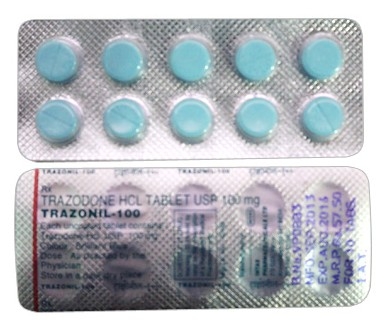
Trazodone
- Trazodone is dispensed by pharmacies worldwide (brands include Desyrel, Trittico, Oleptro and others) and, according to regulatory listings, is prescription-only (Rx) in all markets — check your local health authority or pharmacy for specific dispensing rules.
- Trazodone is used primarily to treat major depressive disorder and is commonly used off-label for insomnia; it is a serotonin antagonist and reuptake inhibitor (SARI) with serotonin reuptake inhibition and 5‑HT2 receptor antagonism contributing to its effects.
- Usual doses: for depression typically start 75–150 mg/day in divided doses (up to 400 mg/day in outpatients; inpatient/specialist use reported up to 600 mg/day); for insomnia off‑label 25–100 mg at bedtime; doses should be adjusted for elderly and those with hepatic/renal impairment.
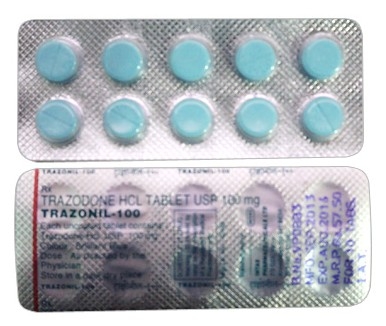
- Administration is oral — immediate‑release tablets (50 mg, 100 mg), extended/prolonged‑release tablets (75 mg, 100 mg, 150 mg) are the common forms; oral solution is rare.
- Onset: sedative effects for sleep are usually apparent within about 30–60 minutes; antidepressant effects typically take 2–4 weeks of regular dosing to begin showing clinical benefit.
- Duration of action: immediate‑release doses typically exert effects for roughly 6–8 hours; extended‑release/prolonged‑release formulations have longer coverage (up to 12–24 hours for some preparations); antidepressant benefits require ongoing daily use.
- Do not consume alcohol with trazodone — alcohol increases sedation, respiratory depression and may worsen side effects.
- The most common side effect is sedation/drowsiness; others include dizziness/orthostatic hypotension, dry mouth, headache, nausea, blurred vision, constipation and fatigue; rare but serious events include priapism, arrhythmias, serotonin syndrome and hyponatremia.
- Would you like to try trazodone without a prescription?

Latest Research Highlights
Basic Trazodone Information
- INN (International Nonproprietary Name): Trazodone
- Brand Names Available In Canada (English): Desyrel; Oleptro (extended‑release reported present in Canada); other international brands listed include Trittico and Trazolan, but Canadian availability of each specific trade name is not specified.
- ATC Code: N06AX05
- Forms & Dosages: Immediate‑release tablets commonly 50 mg and 100 mg; extended‑release tablets commonly 75 mg, 100 mg and 150 mg; prolonged‑release (PR) tablets 75 mg and 150 mg.
- Manufacturers In Canada (English): not specified.
- Registration Status In Canada (English): Registered and marketed for major depressive disorder in North America; Oleptro listed as present in Canada; prescription required.
- OTC / Rx Classification: Prescription only (Rx) in all markets.
Recent systematic reviews and randomized trials through 2024 continue to study trazodone for major depressive disorder and widespread off‑label use for insomnia because of its sedating properties.
International meta‑analyses describe modest antidepressant efficacy that in many studies is comparable to older agents rather than to newer SSRIs.
Canadian real‑world prescribing audits show common low‑dose nighttime use in primary care for sleep problems.
Safety monitoring from pharmacovigilance databases highlights rare but serious risks such as priapism, cardiac arrhythmia, hyponatraemia, and serotonin syndrome.
ATC code N06AX05 confirms trazodone’s classification among other antidepressants.
Clinical Effectiveness In Canada
Patients often ask whether trazodone works faster for sleep than for mood, so here is what the evidence shows.
Trazodone is Health Canada‑aligned with international approvals for major depressive disorder, and antidepressant benefit typically becomes apparent in 2–4 weeks.
Provincial drug‑utilization reports in Canada document frequent off‑label use at lower doses for insomnia, especially in primary care settings.
Typical starting doses for depression are 75–150 mg per day in divided doses, while off‑label insomnia dosing is commonly 25–100 mg at bedtime.
Coverage and reimbursement differ by province and may affect whether prescribers choose trazodone over other antidepressants for a patient.
| Health Canada Monograph Key Points | Provincial Formulary Notes |
|---|---|
| Approved indication: Major Depressive Disorder. | Coverage varies; special authorization may be required in some programs. |
| Usual depression starting dose 75–150 mg/day. | Off‑label insomnia dosing (25–100 mg) commonly used but may not be listed as an approved indication. |
| Prescription only. | DIN verification required by pharmacists for adjudication of provincial claims; DINs not specified here. |
- Clinical Pearls: Start low and titrate slowly for older adults.
- Expect antidepressant effect in 2–4 weeks and plan at least six months continuation after remission for depression.
- For insomnia, use the lowest effective single bedtime dose and reassess regularly.
Indications And Expanded Uses
Patients commonly want to know if trazodone is approved for sleep and whether off‑label prescribing is reasonable.
- Approved: Major depressive disorder (Health Canada alignment with major regulators).
- Off‑Label: Insomnia, particularly when a sedating antidepressant is preferred over controlled hypnotics.
Randomized trials show low‑dose trazodone can improve sleep continuity and reduce sleep latency in some patients, though comparative trials versus standard hypnotics show mixed results.
Canadian prescribers often consider trazodone when patients want a non‑controlled option or when benzodiazepines and Z‑drugs are inappropriate.
- Common off‑label scenarios: primary insomnia at low dose, sleep disturbance related to chronic pain, and, with caution, agitation‑related sleep issues in dementia.
Composition And Brand Landscape
People frequently ask whether brands and generics are equivalent and which formulations exist in Canada.
Trazodone is the INN and is marketed under many brand names worldwide including Desyrel and Trittico variants, and Oleptro is reported present in Canada as an extended‑release option.
| Brand Name (Canada) | Formulation | DIN |
|---|---|---|
| Desyrel | Immediate‑release tablets (commonly 50 mg, 100 mg) | Not specified |
| Oleptro | Extended‑release tablets | Not specified |
| Generic Trazodone (TEVA, APO, others) | Immediate and extended‑release forms | Not specified |
- Common Formulations: IR 50 mg and 100 mg; XR/PR 75 mg, 100 mg, 150 mg.
- Counselling Points: Verify the DIN when processing provincial reimbursement claims and reassure patients that generics contain the same active ingredient.
Contraindications And Special Precautions
Safety questions are among the most frequent at the pharmacy counter, so be clear on who should avoid trazodone.
- Absolute Contraindications: Known hypersensitivity to trazodone or excipients.
- Absolute Contraindications: Recent myocardial infarction.
- Absolute Contraindications: Acute alcohol, hypnotic, or other CNS depressant intoxication.
Relative cautions include cardiac disease with QT‑risk, hepatic or renal impairment, seizure disorder, angle‑closure glaucoma, bipolar disorder risk of inducing mania, and increased fall risk in older adults.
Pharmacovigilance has highlighted rare but serious events such as priapism, arrhythmias, serotonin syndrome, and hyponatraemia (SIADH).
- Absolute vs Relative Contraindications:
- Absolute: hypersensitivity; recent MI; acute CNS depressant intoxication.
- Relative: cardiac disease/QT risk; severe hepatic impairment; seizure disorder; elderly with fall risk.
Incidence data for rare events are not specified in the available product information and pharmacovigilance summaries, but clinicians should counsel patients about red‑flag symptoms that require urgent attention.
Dosage Guidelines
Dosing is different for mood disorders and for off‑label insomnia use, and older adults require lower starting doses.
| Indication / Population | Typical Dose | Notes |
|---|---|---|
| Major Depressive Disorder (Adult) | Start 75–150 mg/day in divided doses; up to 400 mg/day outpatient | Inpatient titration may reach 600 mg/day |
| Insomnia (Off‑Label, Adult) | Single bedtime dose 25–100 mg | Use lowest effective dose; reassess regularly |
| Elderly | Often start at 50 mg at bedtime for insomnia | Start low, go slow; monitor for orthostatic hypotension and sedation |
| Hepatic/Kidney Impairment | Lower initial doses and careful titration | Use with caution due to possible accumulation |
- Titration Steps: Begin at a low dose, reassess in 2–4 weeks for mood symptoms, and increase gradually as tolerated.
- Tapering: Reduce dose gradually to avoid withdrawal symptoms when discontinuing.
Interactions Overview
Interaction concerns are a frequent reason for pharmacist counselling, especially in older people with many medicines.
Trazodone interacts with other serotonergic agents and can increase risk of serotonin syndrome when combined with SSRIs, SNRIs, MAOIs, or triptans.
CYP3A4 and CYP2D6 pathways can affect trazodone levels, so potent inhibitors or inducers of these enzymes may require dose adjustment or monitoring.
Alcohol or other CNS depressants have additive sedative effects and acute intoxication with CNS depressants is an absolute contraindication.
- High‑Risk Drug Pairs: SSRIs, MAOIs, triptans, potent CYP3A4 inhibitors (management: consider dose adjustment, monitoring, or alternative therapy).
- Common Substances To Counsel On: Alcohol, cannabis, and OTC products containing dextromethorphan.
| Interaction | Risk | Management |
|---|---|---|
| SSRIs / SNRIs / MAOIs | Serotonin syndrome | Avoid combination with MAOI; monitor closely and review necessity of combined serotonergic agents. |
| Alcohol / Opioids / Benzodiazepines | Additive sedation and respiratory depression | Advise avoidance and caution with driving; monitor for excessive sedation. |
| CYP3A4 Inhibitors (e.g., some antifungals) | Increased trazodone levels | Consider dose reduction and monitoring for adverse effects. |
Cultural Perceptions And Patient Habits
Many Canadians describe trazodone as a "non‑addictive" sleep aid compared with benzodiazepines, and that perception influences demand.
Forum posts and patient surveys show frequent requests for low‑dose bedtime prescriptions and questions about daytime sedation and driving safety.
Cost, provincial coverage, bilingual information, and stigma around mental health shape patient choices across communities.
- Patient Concerns: cost, sedation, myths about dependence, and questions about sexual side effects.
- Regional Considerations: Rural and Indigenous communities may have limited access to follow‑up and prefer pharmacologic options; bilingual materials are expected in Quebec and many other settings.
Availability And Pricing Patterns
Availability across Canada is broad through major chains and independent pharmacies, with generics being the most commonly dispensed forms.
Retail pricing usually favors generics such as TEVA, APO and similar manufacturers compared with brand prices, though exact prices and DINs are not specified here.
In our online pharmacy, trazodone is available without a prescription, with discreet delivery to Canada (English) in 5‑14 days.
| Retail Availability | Typical Pricing Pattern |
|---|---|
| Major chains (Shoppers Drug Mart, Rexall, Jean Coutu, London Drugs) and independent pharmacies stock generics. | Generics typically lower cost; provincial drug plans affect out‑of‑pocket expenses. |
- Tips To Reduce Cost: request generic substitution, check provincial assistance programs, and ask pharmacists about manufacturer coupons or patient support programs.
- Cross‑border importation may be cheaper for some brand formulations but routine importation is restricted by regulations.
Comparable Medicines And Preferences
When patients ask whether another antidepressant might be better, compare mechanism and side‑effect profiles.
Alternatives commonly used in Canada include SSRIs such as sertraline and escitalopram, and sedating antidepressants such as mirtazapine and doxepin for sleep.
Trazodone’s blockade of 5‑HT2 receptors plus serotonin reuptake inhibition gives it a distinct profile from pure SSRIs.
- Pros of Trazodone: sedating effect useful for insomnia; not a controlled substance.
- Cons of Trazodone: potential orthostatic hypotension, rare priapism, and interaction risks with other serotonergic drugs.
| Indication | Preferred Options Covered By Formularies |
|---|---|
| Depression | SSRIs (sertraline, escitalopram) are common first‑line; trazodone is an alternative especially when sedation is needed. |
| Insomnia | Mirtazapine or low‑dose doxepin may be considered; trazodone used off‑label at low dose. |
FAQ Section
Here are the short answers to the most common questions patients bring to the pharmacy counter.
- Q: Is trazodone safe for sleep?
- A: Low‑dose trazodone can help short‑term insomnia, but it is an off‑label use and should be discussed with the prescriber or pharmacist.
- Counselling Points: Start at the lowest effective dose, avoid alcohol, and reassess regularly for benefit and side effects.
- Q: Will it make me sleepy all day?
- A: Some people experience residual sedation; starting at a low nighttime dose and avoiding driving until effects are known reduces risk.
- Q: Can I take trazodone with my SSRI?
- A: Combining trazodone with other serotonergic agents increases the risk of serotonin syndrome and requires prescriber review and monitoring.
Emergency Signs: priapism, sudden chest pain, severe dizziness, fainting, or signs of serotonin syndrome require immediate medical attention.
Guidelines For Proper Use
Clear steps help patients start therapy safely and know when to seek help.
- Start: Confirm indication and baseline risks such as cardiac disease or fall risk.
- Monitor: Reassess mood or sleep at 2–4 weeks and monitor for adverse events such as excessive sedation, dizziness, or priapism.
- Adjust: Titrate gradually to effect and adjust for hepatic or renal impairment.
- Taper: Reduce dose slowly when stopping to lower withdrawal risk.
| Red‑Flag Symptom | Action |
|---|---|
| Priapism | Seek emergency care immediately; this is a medical emergency. |
| Severe Dizziness/Fainting | Stop medication and seek urgent evaluation; consider orthostatic hypotension and cardiac causes. |
| Signs Of Serotonin Syndrome | Seek emergency care; symptoms include high fever, agitation, rapid heart rate, and muscle rigidity. |
- IR
- Immediate Release.
- XR / PR
- Extended / Prolonged Release formulations that modify absorption.
Delivery Across Canada (English)
| City | Region | Delivery time |
|---|---|---|
| Toronto | Ontario | 5-7 days |
| Montreal | Québec | 5-7 days |
| Vancouver | British Columbia | 5-7 days |
| Calgary | Alberta | 5-7 days |
| Edmonton | Alberta | 5-7 days |
| Ottawa | Ontario | 5-7 days |
| Winnipeg | Manitoba | 5-7 days |
| Hamilton | Ontario | 5-9 days |
| Quebec City | Québec | 5-9 days |
| Halifax | Nova Scotia | 5-9 days |
| Victoria | British Columbia | 5-9 days |
| Saskatoon | Saskatchewan | 5-9 days |
| St. John's | Newfoundland and Labrador | 5-9 days |