Voltaren
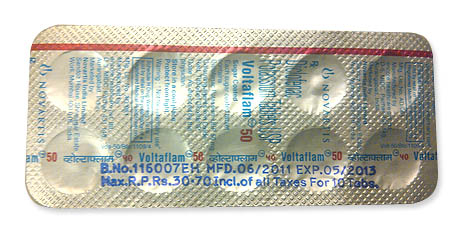
Voltaren
- Voltaren (diclofenac) can be purchased in many places without a prescription for topical forms, such as the 1% gel in Canada and other countries, while oral tablets, injections, and eye drops are usually prescription-only. Availability can vary by country and local regulations.
- Voltaren is used to relieve pain and inflammation from conditions such as arthritis, back pain, sprains, and other musculoskeletal problems. It is a nonsteroidal anti-inflammatory drug (NSAID) that works by blocking cyclooxygenase (COX) enzymes, which lowers prostaglandin production and helps reduce pain, swelling, and fever.
- The usual dose depends on the form and condition: for oral use, adults often take 100–150 mg/day in divided doses, with a maximum of 200 mg/day; for acute pain, 50 mg every 8 hours as needed may be used; for topical gel, apply 2–4 g to the affected area 4 times daily.
- Voltaren is available as enteric-coated tablets, extended-release tablets, topical gel, ophthalmic solution, oral powder, injection solution, and suppositories.
- The onset of action is usually within 30–60 minutes for oral forms, while topical gel may start to ease pain within a few hours, depending on the area treated and severity of symptoms.
- The duration of action is typically about 4–6 hours for standard oral doses, while extended-release forms last longer; topical relief may last several hours and is often used multiple times per day.
- Avoid or limit alcohol while using Voltaren, because alcohol can increase the risk of stomach irritation, ulcers, and gastrointestinal bleeding.
- The most common side effects are nausea, indigestion, abdominal pain, diarrhoea, headache, dizziness, and for topical use, skin irritation, rash, or itching.
- Would you like to try Voltaren without a prescription?
Latest Research Highlights
People often ask whether Voltaren is still a good choice when there are so many pain relievers on the shelf.
Recent reviews and guideline updates from 2022 to 2025 continue to support diclofenac evidence for osteoarthritis, acute sprains and strains, and selected post-operative pain settings, especially when pain is localised.
Internationally, topical diclofenac keeps coming out well for knee and hand osteoarthritis, with good Voltaren gel effectiveness and fewer whole-body risks than oral NSAIDs.
That matters in Canada, where conservative NSAID use is the norm: use the lowest effective dose, for the shortest duration, and prefer topical treatment when the sore joint or muscle is in one spot.
For many Canadians, minor pain is self-managed first because same-day primary care access is not always easy, but pharmacist guidance still matters for choosing the right NSAID.
Oral diclofenac can work well, but the safety picture is less forgiving.
Common adverse effects include nausea, dyspepsia, diarrhoea, abdominal pain, and flatulence, while more serious concerns include GI bleeding, kidney stress, raised blood pressure, and cardiovascular risk.
Those risks are why oral NSAIDs are not used casually in people with active ulcers or bleeding, severe renal or hepatic insufficiency, or a history of NSAID hypersensitivity.
For localised knee pain after a twist at hockey practice, or hand osteoarthritis after a long day at work, topical diclofenac often gives the best balance of relief and safety.
| Topical Diclofenac | Oral Diclofenac | Typical Use Case |
|---|---|---|
| Lower systemic exposure | Higher GI, renal, and cardiovascular risk | Localised osteoarthritis or sprains |
| Good for knee and hand pain | Better for broader inflammatory pain | When pain is in one joint or small area |
| Often available OTC | Usually prescription-based | Short-term self-care with pharmacist advice |
Basic Voltaren Information
- INN (International Nonproprietary Name): Diclofenac
- Brand names available in Canada (English): Voltaren, generic diclofenac products
- ATC Code: M01AB05
- Forms & dosages: Enteric-coated tablet 25mg, 50mg, 75mg, 100mg; extended-release tablet 75mg, 100mg; topical gel 1%, 2%; ophthalmic solution 0.1%; powder for oral solution 50mg; injection 75mg/3mL ampoule; suppository 50mg, 100mg
- Manufacturers in Canada (English): not specified
- Registration status in Canada (English): approved by national health agencies; Rx or OTC status varies by form
- OTC / Rx classification: topical gel mostly OTC; tablet, injection, and eye drops prescription only in most countries
Clinical Effectiveness In Canada
Canadians looking at Health Canada Voltaren information usually want one thing first: does it actually help enough to justify the risks?
For localised pain, the answer is often yes, which is why topical diclofenac is such a common first choice under conservative NSAID use.
Health Canada oversight means product monographs and DIN details matter, because the exact form you buy determines whether it is OTC or prescription, and how it should be used.
In practice, oral and injectable diclofenac are typically prescription-based, while topical diclofenac is commonly accessed OTC.
Provincial plans such as Ontario Drug Benefit, BC PharmaCare, and RAMQ may cover diclofenac depending on age, indication, product type, and whether a generic is used.
That means a brand-name Voltaren tablet may be handled differently from a generic diclofenac product, and public coverage is often tighter than people expect.
Bilingual labelling is normal in Canada and helps patients read directions clearly, especially when a family member is helping an older adult manage chronic pain.
Pharmacists in Shoppers Drug Mart, Rexall, Jean Coutu, and London Drugs often act as the first clinical checkpoint, because they can compare the product, the dose, the DIN, and the coverage pathway before a patient pays out of pocket.
The standard adult dosing ranges are straightforward: osteoarthritis or rheumatoid arthritis usually uses 100 to 150 mg per day in divided doses, with a maximum of 200 mg per day; ankylosing spondylitis usually uses 100 to 125 mg per day in divided doses; acute mild-to-moderate pain often uses 50 mg every 8 hours as needed.
That ATC code, M01AB05, simply identifies diclofenac as an anti-inflammatory and anti-rheumatic medicine.
| Access Pathway | Typical Canadian Status | Usual Payment Pattern |
|---|---|---|
| Topical gel | Commonly OTC | Often out of pocket |
| Oral tablets | Usually prescription | May be covered or partially covered |
| Injection and eye drops | Prescription only | Usually handled through pharmacy and plan review |
Indications And Expanded Uses
What is Voltaren actually used for, and where do Canadian patients stretch the label a bit?
The evidence-backed uses are osteoarthritis, rheumatoid arthritis, ankylosing spondylitis, and acute mild-to-moderate pain.
Those are the main diclofenac uses supported by the product data.
Topical products are often searched for Voltaren gel for back pain, and that is a common real-world question in community pharmacy.
For localised muscular pain, a gel can be reasonable, but the evidence is stronger for peripheral joints than for deep low-back structures.
That is why pharmacists usually steer people toward local treatment when the pain is close to the skin and easy to reach, such as a sore knee, wrist, thumb, or elbow.
Tablets and injections are usually Rx-only, while topical gel is commonly OTC, so the form matters as much as the name on the box.
Ophthalmic solution is used in specific eye settings, and suppositories or injections are generally clinician-directed.
Off-label use still should not be casual, especially for older adults or anyone with cardiovascular or renal risk.
In rural communities, same-day primary care can be harder to access, so people may rely more on OTC topical options and pharmacist advice to get symptom relief safely.
- Approved use
- Use supported by the product information, such as arthritis pain relief or acute pain.
- Off-label use
- Use outside the usual approved wording, such as some cases of localised back pain.
- Localised pain
- Pain in one area that can often be treated directly with a topical medicine.
Composition And Brand Landscape
Diclofenac is the International Nonproprietary Name, and Voltaren is the best-known brand name.
Across different countries, the same medicine may appear under Voltaren, Voltarol, Voltarène, Olfen, Dicloralgin, or a plain generic diclofenac label.
That brand recognition matters in Canada because many shoppers trust a familiar box more than a generic alternative, even though pharmacists often recommend generics to reduce cost.
Common forms include enteric-coated tablets, extended-release tablets, gel, ophthalmic solution, powder for oral solution, injection, and suppositories.
Typical packaging includes oral boxes of 20, 30, 60, or 100 tablets, and gel tubes of 20 g, 50 g, or 100 g.
That is useful when comparing a small tube for an ankle strain with a larger tube for ongoing arthritis care.
Local counselling is also important because bilingual packaging is expected in Canada, and the directions need to be easy to follow without guesswork.
Community pharmacists usually remind patients that the label matters just as much as the brand name, especially when the same molecule can be sold in several strengths and forms.
| Form | Typical Strengths | Common Brand Names |
|---|---|---|
| Enteric-coated tablet | 25mg, 50mg, 75mg, 100mg | Voltaren, Voltarol |
| Extended-release tablet | 75mg, 100mg | Voltaren-XR, Zorvolex |
| Topical gel | 1%, 2% | Voltaren Gel, Voltarol Gel |
| Ophthalmic solution | 0.1% | Voltaren Ophthalmic |
| Powder for oral solution | 50mg | Cambia |
| Injection | 75mg/3mL ampoule | Voltaren IM, generics |
| Suppository | 50mg, 100mg | Voltaren Suppositories |
Contraindications And Special Precautions
When should Voltaren be avoided completely?
The absolute contraindications are important: hypersensitivity to diclofenac or other NSAIDs, active GI ulcers or bleeding, perioperative use around CABG surgery, and severe renal or hepatic insufficiency.
Those warnings matter because diclofenac side effects and warnings are not just about an upset stomach.
Oral NSAIDs can increase the chance of GI bleeding, raise blood pressure, and place stress on the kidneys, which is why conservative use is the Canadian norm.
Relative contraindications include cardiovascular disease or risk factors, previous ulcers or inflammatory bowel disease, older age, mild to moderate renal or hepatic impairment, and use with anticoagulants or other bleeding-risk medicines.
Older adults, people with multimorbidity, and some Indigenous communities can face a heavier burden of chronic disease and a higher chance of NSAID harm if monitoring is uneven; the safety issue is access and follow-up, not assumptions about any group.
Common side effects include nausea, dyspepsia, diarrhoea, abdominal pain, flatulence, headache, dizziness, skin irritation with topical products, and less commonly oedema or increased blood pressure.
Immediate care is needed for suspected GI bleeding, severe allergy or bronchospasm, or any overdose symptoms.
| Category | Examples | What To Do |
|---|---|---|
| Do not use | Active bleeding, NSAID allergy, severe renal or hepatic insufficiency | Seek a different treatment |
| Use caution | Cardiovascular disease, past ulcers, IBD, anticoagulants | Ask a pharmacist first |
| Ask before starting | Older age, kidney problems, liver problems | Review dose and duration |
Dosage Guidelines
How much Voltaren is enough, and how much is too much?
For adults, oral diclofenac is usually dosed at 100 to 150 mg per day in divided doses for osteoarthritis or rheumatoid arthritis, with a maximum of 200 mg per day.
For acute mild-to-moderate pain, 50 mg every 8 hours as needed is the standard range.
For ankylosing spondylitis, the usual adult range is 100 to 125 mg per day in divided doses.
Topical gel is applied at 2 to 4 g to the affected area 4 times daily.
Voltaren 50 mg tablets are a common strength, but the right plan depends on the condition, age, kidney function, and other medicines.
Children under 18 are not recommended to use diclofenac except with specialist guidance.
Older adults should use the lowest effective dose because GI, renal, and cardiovascular side effects are more likely.
People with renal impairment need close monitoring, and liver impairment may require dose reduction.
Oral treatment should be for the shortest possible duration, while topical treatment is often used for 7 to 21 days for mild injuries, with reassessment if there is no improvement after 7 days.
Pharmacists also remind patients to take oral products with food and to review use if they are already on blood thinners or antihypertensives.
| Condition | Form | Usual Adult Dose |
|---|---|---|
| Osteoarthritis or rheumatoid arthritis | Oral | 100 to 150 mg/day in divided doses |
| Acute mild-to-moderate pain | Oral | 50 mg every 8 hours as needed |
| Ankylosing spondylitis | Oral | 100 to 125 mg/day in divided doses |
| Localised pain | Topical gel | 2 to 4 g 4 times daily |
Interactions Overview
Can Voltaren be taken with other medicines, or does it clash with the rest of the medicine cabinet?
The biggest interaction concerns are anticoagulants, antiplatelets, other NSAIDs, corticosteroids, ACE inhibitors or ARBs, diuretics, lithium, and methotrexate.
Those combinations can raise the risk of GI bleeding, kidney strain, and blood pressure changes.
That is why the diclofenac drug interactions list is something pharmacists review carefully before a patient leaves the counter.
Alcohol can also irritate the stomach, and dehydration during summer travel, long drives, or outdoor work can make renal risk worse.
Topical products still absorb into the body to some degree, but usually much less than oral forms.
That does not mean topical therapy is risk-free, especially if it is used over large areas or together with other NSAIDs.
Natural pain products are not automatically safer either, especially when they are layered on top of prescription blood pressure medicines or blood thinners.
- Blood thinners and antiplatelet drugs
- Another NSAID, such as ibuprofen or naproxen
- Corticosteroids
- ACE inhibitors, ARBs, and diuretics
- Lithium or methotrexate
| Combination | Main Concern | Pharmacist Advice |
|---|---|---|
| Diclofenac plus ibuprofen | Higher bleeding and kidney risk | Do not double up NSAIDs |
| Diclofenac plus alcohol | Stomach irritation | Limit alcohol and monitor symptoms |
| Diclofenac plus ACE inhibitor or diuretic | Kidney strain and reduced blood pressure control | Check with a pharmacist or prescriber |
Cultural Perceptions And Patient Habits
Why do so many Canadians reach for Voltaren first?
It is practical, familiar, and easy to understand, especially for arthritis and joint discomfort.
Online patient forums and Reddit Canada-style discussions often describe topical NSAIDs as more targeted and less harsh than pills.
That perception is understandable, because a gel rubbed onto a sore knee feels more direct than swallowing a tablet.
At the same time, the evidence reminds us that oral forms carry more systemic risk, so “stronger” is not always “better.”
Urban patients often compare prices across several chains, while rural patients may have fewer pharmacy options and rely more on local drugstores or mail-order services.
Universal healthcare also makes Canadians cost-conscious, even when they do have drug coverage.
Family caregiving is part of the picture too, because a spouse or adult child may be helping an older parent manage dosing, refills, and side effects.
Bilingual labelling helps, but so does a quick conversation at the counter about what the medicine is for and how long to use it.
- Can I use the gel on my knee or back?
- How long should I keep taking the tablets?
- Can I use this with Advil or Aleve?
- Will my plan cover the generic version?
- What side effects mean I should stop?
Availability And Pricing Patterns
Where do Canadians actually buy Voltaren?
Topical products are commonly sold OTC through Shoppers Drug Mart, Rexall, Jean Coutu, and London Drugs, while oral forms usually move through prescription channels and provincial plans.
That difference matters because a shopper comparing where to buy Voltaren OTC may see a shelf product beside a prescription bottle with the same active ingredient.
Generic topical and oral diclofenac often costs less than brand-name products, and public coverage can reduce the burden when the criteria are met.
Cross-border U.S. pricing can look lower or higher depending on the exchange rate, insurance, and whether the American product is OTC or Rx.
Online Canadian pharmacies can be convenient, but the DIN and the legitimacy of the seller should always be checked before ordering.
Rural shipping can take longer, so patients in smaller communities may want to order early rather than wait until the last tube runs out.
In our online pharmacy, Voltaren is available without a prescription, with discreet delivery to Canada (English) in 5-14 days.
| Market | Rx Status | Usual Purchase Channel |
|---|---|---|
| Canada | OTC topical; prescription for most oral forms | Pharmacy counter or online pharmacy |
| United States | OTC topical; prescription for oral and eye forms | Drugstore or prescription pharmacy |
| Provincial plan purchase | Depends on product and criteria | Community pharmacy with coverage review |
Comparable Medicines And Preferences
How does Voltaren compare with the other NSAIDs Canadians know well?
Ibuprofen is familiar, widely used, and often cheaper.
Naproxen may last longer between doses, which some people prefer for ongoing pain.
Celecoxib may be chosen when GI tolerance is a priority, while meloxicam and piroxicam are other prescription-style options that may fit certain patients better.
Ketoprofen also sits in the same general NSAID family.
For localised joint pain, topical diclofenac may be the better fit because it can reduce whole-body exposure.
When patients ask about diclofenac vs ibuprofen efficacy, the real answer is usually personal: the best product is the one that gives enough relief with acceptable risk and access.
In Canada, many people start with OTC options and escalate only if pain persists, partly because primary care wait times can be a barrier.
Choice should consider age, cardiovascular risk, GI history, and kidney function, not just price or brand recognition.
| Medicine | Typical Strength | Why Patients Choose It |
|---|---|---|
| Ibuprofen | OTC and Rx options | Familiar and often affordable |
| Naproxen | OTC and Rx options | Longer coverage |
| Celecoxib | Prescription | GI tolerance concerns |
| Topical diclofenac | OTC gel | Localised joint pain with less systemic exposure |
Frequently Asked Questions
Is Voltaren gel available without a prescription in Canada? Yes, topical gel is commonly OTC in Canada, while oral, injection, and eye-drop forms are usually prescription-only.
Can I use Voltaren for back pain? It is sometimes used for localised muscular back pain, but evidence is stronger for peripheral joints than deep low-back structures.
What side effects should I watch for? Nausea, stomach upset, diarrhoea, skin irritation, headache, dizziness, and any sign of GI bleeding need attention.
Can I take Voltaren with ibuprofen or naproxen? No, do not double up NSAIDs because the risk of bleeding and kidney stress goes up.
Is it covered by Ontario Drug Benefit, BC PharmaCare, or RAMQ? Coverage can vary by age, indication, and whether the product is generic or brand, so a pharmacist should check the plan details.
Guidelines For Proper Use
What is the safest way to use Voltaren at home?
Start with the lowest effective dose for the shortest time possible, especially with oral diclofenac.
Apply topical gel only as directed, wash hands after use, and avoid covering large areas unless a clinician specifically says to do so.
Store the medicine at room temperature, between 20 and 25°C, and keep tablets dry and protected from moisture.
Gel should be kept away from heat and direct sunlight, and topical or ophthalmic forms should not be frozen.
If a dose is missed, take it as soon as remembered unless it is almost time for the next one.
Do not double up to catch up.
If overdose is suspected, seek immediate medical attention right away, especially for GI bleeding, somnolence, hypotension, or renal failure.
Pharmacists at major chains can review interactions, and patients on provincial plans should check the DIN and formulary details before refilling.
Oral forms need more caution than topical products, so the pill is not automatically the better choice just because it feels more powerful.
- Use exactly the dose recommended on the label or by the prescriber.
- Take oral products with food if advised by the pharmacist.
- Avoid mixing with other NSAIDs unless specifically told to do so.
- Watch for stomach bleeding, swelling, breathing trouble, or reduced urine output.
| Situation | What To Do |
|---|---|
| Missed dose | Take when remembered unless the next dose is close |
| Too much medicine taken | Seek urgent medical help |
| No improvement after 7 days of topical use | Reassess with a pharmacist or prescriber |
Delivery Across Canada (English)
| City | Region | Delivery time |
|---|---|---|
| Toronto | Ontario | 5-7 days |
| Ottawa | Ontario | 5-7 days |
| Mississauga | Ontario | 5-7 days |
| Calgary | Alberta | 5-7 days |
| Edmonton | Alberta | 5-7 days |
| Vancouver | British Columbia | 5-7 days |
| Surrey | British Columbia | 5-7 days |
| Winnipeg | Manitoba | 5-7 days |
| Quebec City | Quebec | 5-7 days |
| Montreal | Quebec | 5-7 days |
| Halifax | Nova Scotia | 5-7 days |
| St. John's | Newfoundland and Labrador | 5-7 days |
| Regina | Saskatchewan | 5-9 days |
| Saskatoon | Saskatchewan | 5-9 days |
| Charlottetown | Prince Edward Island | 5-9 days |