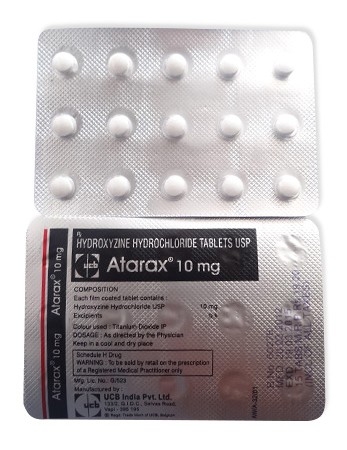
Atarax
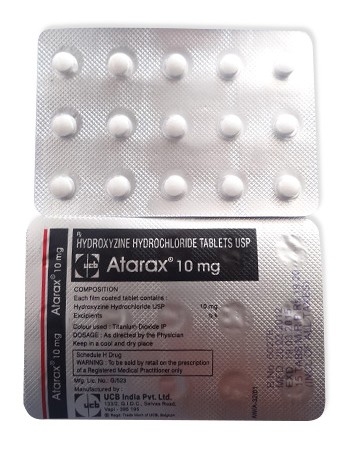
Atarax
- Atarax (hydroxyzine) may be available from some pharmacies and online sellers in Canada/English-speaking markets, but it is officially a prescription-only medicine in major countries. Availability without a prescription can vary by source and local rules.
- Atarax is used for itching caused by allergies or skin conditions, as well as short-term relief of anxiety and as a sedating antihistamine. It works by blocking histamine H1 receptors and also has calming effects on the central nervous system.
- The usual adult dose is 25 mg 3–4 times daily for itching, or 50–100 mg per day divided for anxiety. Doses are lower in children and older adults, and adjustments may be needed for kidney or liver problems.
- It is available as tablets, oral solution or syrup, and in some markets as injectable solution.
- The medication usually starts working within 15–60 minutes, depending on the form taken and the reason for use.
- The duration of action is typically about 4–6 hours for a single dose, with longer effects sometimes felt in sedative use.
- Do not drink alcohol while taking Atarax, as alcohol can increase drowsiness, dizziness, and impaired coordination.
- The most common side effects are drowsiness, dry mouth, dizziness, headache, fatigue, and sometimes blurred vision or mild stomach upset.
- Would you like to try Atarax without a prescription?
Latest Research Highlights On Hydroxyzine In Canada And Internationally
- INN (International Nonproprietary Name): Hydroxyzine
- Brand names available in Canada (English): Atarax, generic hydroxyzine
- ATC Code: N05BB01; also R06AE03 for systemic antihistaminic use
- Forms & dosages: Tablets 10 mg, 25 mg, 50 mg; oral solution/syrup 10 mg/5 mL; injectable solution 25 mg/mL where applicable
- Manufacturers in Canada (English): Current market supply is mostly through generic manufacturers; specific distributor availability varies by province and pharmacy
- Registration status in Canada (English): Prescription only in major markets; Canadian product availability is pharmacy- and province-dependent
- OTC / Rx classification: Prescription only
Curious whether hydroxyzine still has a place in modern care?
Between 2022 and 2025, the strongest messages from international reviews have stayed consistent: hydroxyzine is still useful for pruritus, short-term anxiety relief, and pre-procedure sedation, but it is not a drug for chronic, open-ended use.
Canadian-specific trial data are limited, so clinicians here usually lean on Health Canada product monographs, international safety reviews, and updated labelling from regulators such as the EMA and FDA-linked product changes.
The big trade-off is familiar to pharmacists and prescribers across family medicine, dermatology, and psychiatry: hydroxyzine can work quickly, especially when a patient wants a non-benzodiazepine option, but sedation burden and QT prolongation hydroxyzine warnings matter just as much as symptom relief.
Provincial formularies can also shape uptake, since coverage and DIN-specific listing may influence whether a prescriber reaches for hydroxyzine prescription Canada or chooses another agent first.
| Finding | Study Type | Relevance To Canadian Practice |
|---|---|---|
| Ongoing benefit for itch, anxiety, and short-term sedation | International monographs and safety reviews | Supports selective use in outpatient and peri-procedural care |
| Meaningful drowsiness and anticholinergic burden | Regulatory labelling updates | Important for older adults, drivers, and shift workers |
| QT prolongation risk requires screening | Health authority safety communications | Relevant when other QT-prolonging drugs are on the med list |
| Best used short term rather than chronically | Clinical monographs and pharmacovigilance summaries | Matches Canadian prescribing habits in family practice and dermatology |
Data highlight: Health Canada-style cautioning, EMA labelling updates, and FDA-linked warnings have all reinforced the same message: screen for cardiac risk, avoid unnecessary long-term exposure, and check concurrent QT-prolonging medicines before dispensing.
Basic Atarax Information
- INN (International Nonproprietary Name): Hydroxyzine
- Brand names available in Canada (English): Atarax, generic hydroxyzine
- ATC Code: N05BB01; also R06AE03 for antihistaminic use
- Forms & dosages: Tablets 10 mg, 25 mg, 50 mg; oral solution/syrup 10 mg/5 mL; injectable solution 25 mg/mL where applicable
- Manufacturers in Canada (English): Current generics vary by supplier and province
- Registration status in Canada (English): Prescription only in major markets; local access depends on formulary and stock
- OTC / Rx classification: Prescription only
Clinical Effectiveness In Canada: What Health Professionals Look For
Wondering why a pharmacist may suggest hydroxyzine instead of a more familiar allergy tablet?
In Canada, hydroxyzine is a prescription-only antihistamine and anxiolytic, and clinicians look for a clear DIN, a current Health Canada hydroxyzine monograph, and provincial drug-plan coverage before they prescribe it.
The monograph is the product’s official Canadian document, while the formulary is the list that tells a province whether a drug is covered and under what conditions.
That distinction matters because hydroxyzine brands in Canada may be stocked differently at Shoppers Drug Mart, Rexall, Jean Coutu, or London Drugs, and reimbursement can depend on the exact product and strength.
In practice, hydroxyzine effectiveness is strongest when the goal is short-term symptom control for itchy skin, acute anxiety, or sedation before a procedure.
Drowsiness is the limitation that often decides the outcome, especially for people who need to stay alert for work or caregiving.
| Use Case | Typical Benefit | Main Limitation |
|---|---|---|
| Itchy skin conditions | Can reduce pruritus and help sleep | May cause daytime sedation |
| Acute anxiety | May provide short-term calming | Not ideal for chronic use |
| Pre-procedure sedation | Useful as a single-dose adjunct | Timing and drowsiness must be planned |
For allergy symptoms, clinicians may compare hydroxyzine with cetirizine or loratadine, since those options are usually less sedating.
For anxiety, it is often weighed against buspirone or a short course of benzodiazepines depending on urgency, past history, and safety concerns.
Indications And Expanded Uses In Canadian Practice
Is the main complaint an itch that is keeping someone awake, or nerves that need calming fast?
Hydroxyzine in Canada is used both on-label and, in some settings, off-label, and that dual role is part of why clinicians value it.
- Approved uses: allergic pruritus, urticaria-related itching, anxiety/tension, and short-term pre-operative sedation.
- Common off-label use: short-term sleep support when itch or anxiety is the driver, with careful counselling about next-day sedation.
Patient-centred prescribing often means choosing hydroxyzine when itching is disrupting sleep or when a non-opioid, non-benzodiazepine sedating option is preferred.
Local monograph wording should always be checked because formulations are not identical across markets.
Some patients describe hydroxyzine as “a pill that helps both itch and nerves,” while others want a non-sedating choice so they can keep working or drive home safely.
That conversation should be especially clear in bilingual settings, since English and French labels must be understood accurately, particularly in Quebec and New Brunswick.
For hydroxyzine for itching or hydroxyzine for anxiety, the key is matching the indication to the shortest useful duration.
Composition And Brand Landscape: Atarax, Generics, And Canadian Access
What’s actually on the bottle when someone asks for Atarax tablets?
The INN is hydroxyzine, and Atarax is the best-known brand name in many international markets, although the original U.S. Atarax brand has been discontinued and generics are used there.
In Canada, patients are more likely to see generic hydroxyzine than a branded Atarax product, and supply can vary by province and pharmacy chain.
Oral tablets, syrup, and injectable forms exist in the broader market, but local availability depends on the product and the dispenser’s stock.
| Form | Strength | Packaging |
|---|---|---|
| Tablets | 10 mg, 25 mg, 50 mg | Blister packs of 10, 25, 30, 60, or 90 |
| Oral solution / Syrup | 10 mg/5 mL | Bottle of 100–150 mL with dosing cup |
| Injectable solution | 25 mg/mL | Ampoules in some markets |
One practical detail matters here: oral and injectable forms may use different salts, so local monographs need to be checked rather than assuming they are interchangeable.
Contraindications And Special Precautions For Canadian Patients
When should hydroxyzine be avoided rather than adjusted?
The highest-value safety points are straightforward: hydroxyzine should be avoided in known allergy, early pregnancy, prolonged QT interval, and major QT-risk situations.
- Known allergy to hydroxyzine or an excipient.
- Early pregnancy.
- Prolonged QT interval or strong risk factors for QT prolongation.
- Severe hepatic or renal impairment, depending on local guidance.
Data highlight: the main cardiac safety concern is QT prolongation hydroxyzine, especially when combined with other QT-prolonging drugs.
Older adults need special caution because sedation, falls, confusion, urinary retention, and anticholinergic burden can become the main problem rather than the original symptom.
Canadian prescribers also consider cardiovascular disease, seizure history, glaucoma, prostatic hypertrophy, and renal or hepatic impairment when weighing risk.
For patients in rural or remote communities, including many Indigenous communities where follow-up can be harder to arrange, safer prescribing and a clear monitoring plan matter even more.
Before dispensing, pharmacists should verify the entire medication list for QT-prolonging therapy and other sedating drugs.
Dosage Guidelines: Canadian-Style Dosing And Adjustments
How much hydroxyzine is used, and how do clinicians keep it safe?
Canadian practice often starts conservatively, with lower doses in older adults and careful counselling on timing, missed doses, and not doubling up.
| Indication | Adult Dose | Paediatric Dose |
|---|---|---|
| Allergic pruritus | 25 mg 3 to 4 times daily; max 100 to 150 mg/day | 0.5 to 1 mg/kg/dose 3 to 4 times daily |
| Anxiety / tension | 50 to 100 mg/day divided; max 100 mg/day | About 1 mg/kg or as directed by a physician |
| Pre-op sedation | 50 to 100 mg as a single dose | 0.6 mg/kg single dose or as directed |
Syrup is often preferred in children because it allows more accurate weight-based dosing and easier dose recalculation.
- Start low, go slow
- Begin with the lowest practical dose, especially in older adults or people with organ impairment, and titrate only if needed.
- mg/kg recalculation
- For children, the dose should be recalculated for current weight rather than copied from a previous prescription.
Pharmacists also remind patients not to take an extra dose if one is missed and to check the DIN if a drug plan requires a specific product for reimbursement.
Interactions Overview: Food, Alcohol, And Common Drug Conflicts
Can hydroxyzine be taken with a drink after work, or with that over-the-counter cold product in the cupboard?
The short answer is that alcohol should be avoided or minimized, because sedation can intensify quickly.
- CNS depressants: additive sleepiness and slowed reaction time.
- QT-prolonging drugs: increased heart-rhythm risk.
- Other antihistamines: more sedation and anticholinergic effects.
- Anticholinergics: more dry mouth, constipation, confusion, or urinary retention.
- Other dizziness-causing medicines: higher fall risk.
Food interactions are not the main issue; the bigger concern is additive sedation and rhythm risk.
That includes cannabis or other sedating products that are commonly discussed in Canadian households.
Patients should also watch over-the-counter cold and flu products sold in Canada, since several of them can stack drowsiness without being obvious at first glance.
| Interaction | Risk | Counselling Tip |
|---|---|---|
| Alcohol | More sedation and slower reaction time | Avoid if possible |
| QT-prolonging drugs | Heart-rhythm risk | Ask a pharmacist to review the full list |
| Other sedatives | Excessive drowsiness | Use caution with driving and machinery |
Cultural Perceptions And Patient Habits In Canada
Why do some people call hydroxyzine a “strong allergy pill” while others use it for sleep?
Canadian patients often see hydroxyzine as a practical “itch and calm” medication, but they also know it can leave them too sleepy for school, work, or driving.
That tension shows up in both urban and rural settings.
City patients may have more pharmacy choices and quicker refills, while rural and northern patients may depend on fewer dispensaries, longer travel times, and telepharmacy or mail-order support.
Online discussion spaces, including Reddit Canada-style forums, often ask whether hydroxyzine feels strong, whether it is basically an allergy pill, and whether it helps sleep.
- People worry about next-day grogginess.
- Drivers want to know if winter roads and drowsiness are a bad mix.
- Parents ask whether a syrup for children exists.
- Newcomers compare English and French labels with imported brand names.
Data highlight: the most common practical concern is sedation, not lack of effect.
That is why the patient conversation matters as much as the prescription.
Availability And Pricing Patterns Across Canadian Pharmacies
Is hydroxyzine easy to find in Canada, and what does it usually cost?
Shoppers Drug Mart, Rexall, Jean Coutu, and London Drugs may stock generic hydroxyzine more consistently than brand-name Atarax, but availability can still vary by province and supplier.
Prices depend on province, quantity, DIN, and whether a drug plan is paying part of the bill.
| Province | Plan Factor | Patient Impact |
|---|---|---|
| Ontario | Ontario Drug Benefit rules may apply | Coverage depends on eligibility and product |
| British Columbia | BC PharmaCare listings matter | Out-of-pocket cost can change by formulary status |
| Quebec | RAMQ coverage can be significant | Different reimbursed options may apply |
Some Canadians compare U.S. prices, but crossing the border for a prescription Rx is not usually straightforward and may not save money once exchange rates, travel, and dispensing differences are added up.
In rural areas, pharmacy transfer services or mail-order options can help if stock is tight.
For some online pharmacy shoppers, atarax may be available without a prescription, with discreet delivery to Canada in 5-14 days, which can be convenient when local access is limited.
Comparable Medicines And Canadian Preferences
When hydroxyzine is not the best fit, what do Canadian clinicians usually consider instead?
Hydroxyzine alternatives in Canada include cetirizine and loratadine for allergies, diphenhydramine or promethazine in selected cases, and buspirone or benzodiazepines for anxiety depending on the clinical scenario.
| Medicine | Sedation | Daytime Use | Main Caution |
|---|---|---|---|
| Hydroxyzine | Moderate to high | Sometimes limited | Drowsiness and QT risk |
| Cetirizine | Lower | Better for many people | Less useful when sedation is desired |
| Loratadine | Low | Good daytime option | Not a calming medicine |
| Diphenhydramine | High | Poor for routine use | Brain fog and anticholinergic effects |
| Buspirone | Low | Good for chronic anxiety | Not a quick sedative |
Hydroxyzine is distinctive because it can address both itch and anxiety, but it is not first choice when non-sedating symptom control is preferred.
That matters for people who need to work, care for family, or drive in winter conditions without brain fog.
Frequently Asked Questions About Atarax In Canada
- Is Atarax available in Canada?
- Hydroxyzine is available in Canada as a prescription medication, and patients often receive generic hydroxyzine rather than a branded Atarax product.
- Can I take hydroxyzine for itching at night?
- It is commonly used for itchy skin when sleep is being disrupted, but drowsiness is expected and should be planned for.
- Will my provincial plan cover it?
- Coverage depends on the province, the DIN, and the exact formulation listed on the formulary.
- Can I drive after taking it?
- Driving caution is essential because hydroxyzine can impair alertness, especially after the first dose.
- Is there a syrup for children?
- A syrup or oral solution exists in some markets, and paediatric dosing must be weight-based and supervised by a health professional.
U.S. brand names do not always match Canadian dispensing labels, so checking the bottle and the DIN is worth the extra minute.
Guidelines For Proper Use: Pharmacist And Provincial Advice
How should hydroxyzine be taken so it works safely and predictably?
Take it exactly as directed, and keep the dose schedule simple enough that it can be followed without guesswork.
- Do not mix with alcohol.
- Check for sleepy side effects before driving or operating equipment.
- Rise slowly from sitting or lying positions.
- Review every medicine for QT risk, including OTC products.
- Use the correct DIN when a drug plan requires a specific product.
If a dose is missed, take it as soon as remembered unless the next dose is close, and do not double up.
Overdose warning signs include severe drowsiness, confusion, seizures, and heart-rhythm symptoms, and urgent medical help should be sought right away if those occur.
Store tablets and syrup at room temperature, protect from moisture, and do not freeze the syrup.
For rural or remote patients, blister packs, delivery services, and coordinated refills can make travel less stressful.
Data highlight: severe drowsiness, confusion, seizures, or palpitations are not “wait and see” symptoms.
Delivery Across Canada (English)
| City | Region | Delivery Time |
|---|---|---|
| Toronto | Ontario | 5-7 days |
| Ottawa | Ontario | 5-7 days |
| Mississauga | Ontario | 5-7 days |
| Hamilton | Ontario | 5-7 days |
| Montreal | Quebec | 5-7 days |
| Quebec City | Quebec | 5-7 days |
| Vancouver | British Columbia | 5-7 days |
| Victoria | British Columbia | 5-7 days |
| Calgary | Alberta | 5-7 days |
| Edmonton | Alberta | 5-7 days |
| Winnipeg | Manitoba | 5-7 days |
| Halifax | Nova Scotia | 5-7 days |
| Saskatoon | Saskatchewan | 5-9 days |
| St. John’s | Newfoundland and Labrador | 5-9 days |
| Kelowna | British Columbia | 5-9 days |