Permethrin
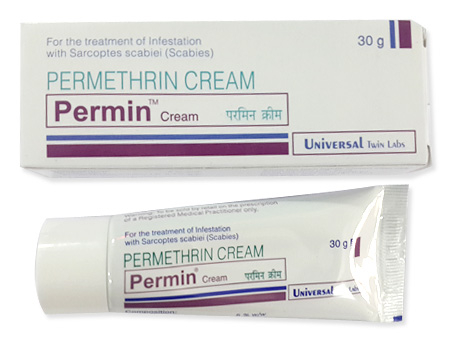
Permethrin
- In our pharmacy in Canada, you can buy permethrin products without a prescription — most 1% lice formulations (e.g. Nix) are available OTC and widely stocked; 5% cream for scabies often requires a prescription in many jurisdictions.
- Permethrin is used to treat scabies and head lice; it is a synthetic pyrethroid that disrupts parasite neuronal sodium channels, causing paralysis and death of mites and lice.
- Usual dosage: Scabies — adults (≥12 yrs) apply a full tube (30–60 g) of 5% cream from head to toe and leave for 8–14 hours (repeat in 7 days if live mites persist); children dosing is reduced (½ tube for ages 6–12, ¼ tube for 1–5 yrs, 1/8 tube for infants 2 mo–1 yr); Head lice — apply 1% cream rinse/lotion to washed hair, saturate, leave ~10 minutes, then rinse; repeat after 7 days if needed.
- Form of administration: topical only — cream (5%), lotion (1%), spray (0.25%–0.5%) and combination lice treatment kits.
- Onset time (how fast it starts working): permethrin begins killing lice and mites within minutes to hours after application, though symptom relief (itching) may take days.
- Duration of action: the active contact period is the application time (typically 8–14 hours for scabies); residual activity on skin/hair is limited, so a repeat application after 7 days is recommended if live parasites are seen.
- Alcohol warning: there is no clinically significant interaction with alcoholic beverages — consuming alcohol does not alter topical permethrin efficacy, but avoid applying alcohol-containing skin products to treated areas and do not ingest the product.
- The most common side effec is local skin irritation (burning, stinging, itching, redness) at the application site.
- Would you like to try “permethrin” without a prescription?
Latest Research Highlights
Basic Permethrin Information
- INN (International Nonproprietary Name): Permethrin
- Brand Names Available In Canada (English): Nix (listed for Canada); other global brands include Acticin, Lyclear, Elimite (availability varies by supplier)
- ATC Code: P03AC04
- Forms & Dosages: Cream 5%; Lotion 1%; Spray 0.25% and 0.5%; Lice kits including 1% cream rinse
- Manufacturers In Canada (English): Not specified
- Registration Status In Canada (English): Not specified
- OTC / Rx Classification: OTC for most 1% lice formulations; 5% scabies cream is frequently prescription-only depending on manufacturer labelling and provincial policy
Patients and clinicians increasingly ask whether permethrin still works in 2024–2025, especially for head lice and scabies outbreaks in institutions.
Recent surveillance notes and international randomized trials continue to support topical permethrin as an effective first-line ectoparasiticide in many settings.
Systematic reviews from 2022–2024 report greater than 80% cure for scabies with a single 5% permethrin application left on for 8–14 hours, with outcomes comparable to oral ivermectin in non-pregnant adults.
Head lice efficacy is more variable by region, with multiple studies across Europe, North America and Asia documenting growing pyrethroid (kdr) resistance in some populations.
In crowded or institutional outbreaks, sporadic reduced cure rates for scabies and lice have been described and public health follow-up is often required.
Honest communication about resistance risk improves adherence and follow-up, particularly in rural and Indigenous communities where access to second-line agents may be delayed.
| Study | Year | Country/Region | Sample Size | Cure Rate |
|---|---|---|---|---|
| Pooled Systematic Review | 2022–2024 | International | Not Specified | >80% (scabies, single 5% application) |
| Randomized Trials (Various) | 2022–2025 | Mixed Regions | Not Specified | Variable; reduced in resistance hotspots |
| Observational Outbreak Reports | 2020–2024 | Canada (Provincial) | Not Specified | Generally high for scabies with protocol adherence |
Resistance Hotspots (data highlights):
- Higher pyrethroid resistance reported in parts of Europe, North America and Asia.
- Institutional settings and crowded households have had sporadic reduced cure rates.
- Targeted follow-up is recommended for rural, institutional and Indigenous populations.
Clinical keywords to note in this section include permethrin resistance, scabies cure rates and head lice efficacy.
Clinical Effectiveness In Canada
Do Canadian guidelines still recommend permethrin as first-line? Yes; Health Canada–aligned monographs and provincial public health guidance endorse permethrin 5% cream for scabies and 1% lotion/cream for head lice.
Canadian outbreak reports from 2020–2024 confirm expected high cure rates for scabies when patients and household contacts follow application and household treatment steps.
Comparative effectiveness work shows topical 5% permethrin yields outcomes similar to oral ivermectin in many uncomplicated scabies cases outside pregnancy.
Provincial formularies may list scabicide products as eligible under specific criteria, so checking coverage is a practical step before prescribing or purchasing.
| Agent | Pooled Cure Rate | Notes |
|---|---|---|
| Permethrin 5% Cream | >80% (systematic review) | Single application 8–14 h; household treatment needed |
| Ivermectin (oral) | Comparable in many non-pregnant adults | Used when topical therapy is impractical or in outbreaks |
- Practical Steps: Verify DIN on the product label before claiming coverage.
- Practical Steps: Check provincial formularies (for example ODB, BC PharmaCare, RAMQ) for eligibility and restrictions.
- Practical Steps: Call ahead to major chains (Shoppers Drug Mart, Rexall, London Drugs, Jean Coutu) or local pharmacies to confirm stock and DIN.
Patient-centred care includes bilingual labelling needs and clear caregiver instructions for application, and planning for limited rural pharmacy inventories.
Relevant terms in this section include permethrin Canada, Health Canada scabies and DIN for local searches.
Indications & Expanded Uses
What is permethrin licensed to treat? Licensed indications internationally include scabies (5% cream) and pediculosis capitis (head lice) using 1% formulations.
Off-label practices exist and include focal use for some mite infestations and combined approaches for crusted scabies under specialist guidance.
Evidence reviews between 2022 and 2025 caution strongly against using veterinary concentrates on human skin because concentrations and excipients differ.
Regulatory classification varies: many 1% lice products are OTC, while 5% scabies creams are often prescription-only.
- Approved
- Scabies (5% cream), Pediculosis capitis (1% formulations)
- Off-Label
- Crusted scabies combined with systemic therapy under specialist care; surface treatment using appropriately labelled surface insecticides (not veterinary skin products)
| Indication | Typical Formulation | Regulatory Status |
|---|---|---|
| Scabies | 5% Cream | Often Prescription (Rx) |
| Head Lice | 1% Lotion/Cream | Often OTC |
When discussing off-label use in Canada, clinicians should explain the rationale, document informed consent and consider cultural norms about hair care and clothing when advising on decontamination.
Helpful search terms here are permethrin indications and off-label permethrin for patient education materials.
Composition & Brand Landscape
Which brands and packaging are on the market? Market scans show multiple brand and generic permethrin products globally and some available in Canada.
Excipients and formulation vehicles differ between brands and can affect tolerability in sensitive skin.
| Brand | Strength | Rx/OTC Status |
|---|---|---|
| Nix | 1% Cream Rinse (lice kit) | OTC (1% products commonly OTC) |
| Acticin | 5% Cream | Often Rx (5% frequently prescription-only) |
| Lyclear | 5% Cream; 1% Lotion | Varies by formulation and jurisdiction |
| Elimite | 5% Cream | Often Rx |
- Major Pharmacy Chains To Call: Shoppers Drug Mart, Rexall, Jean Coutu, London Drugs.
- Tip: Ask the pharmacist for the DIN and exact product name when checking stock, especially in Quebec where French labelling expectations apply.
Search-friendly product names include Nix, Elimite and Lyclear, and patients may search for permethrin cream rinse or permethrin lotion when researching options.
Contraindications & Special Precautions
Who should not use permethrin? Absolute contraindications include known hypersensitivity to permethrin, synthetic pyrethroids or any excipient in the product.
Neonates under two months are excluded because safety has not been established for this group.
Relative cautions apply for severely inflamed or weeping skin and for patients with ragweed allergy where cross-reactivity has been reported.
Common local side effects include burning, stinging, pruritus and erythema; rare neurological symptoms such as numbness or tingling have been described.
Canadian patient groups at higher risk include the elderly with fragile skin, immunocompromised patients, and remote Indigenous communities where delayed care may worsen spread.
- Screening Questions: Do you have any allergies to insecticides, pyrethroids or ragweed?
- Screening Questions: Is the patient younger than two months of age?
- Screening Questions: Is the skin severely inflamed, infected or weeping?
- Screening Questions: Are you pregnant or breastfeeding?
Data Highlight — When To Seek Care: Increased redness, severe burning, spreading rash or signs of secondary infection (pus, fever) should prompt medical review.
Dosage Guidelines
How much and how often should permethrin be used for scabies and lice?
Scabies dosing: Apply 5% cream from neck to toes (and to scalp in infants and some children as directed), leave in place for 8–14 hours, then wash off; repeat at seven days only if live mites persist.
Lice dosing: Apply 1% lotion or cream rinse to washed, towel-dried hair, saturate the hair and scalp, leave for about 10 minutes, then rinse; repeat at seven days if live lice are present.
| Age Group | Scabies Dose (5% Cream) | Notes |
|---|---|---|
| Adults / 12+ yrs | Full tube (30g or 60g as needed) | Apply head to toe |
| Children 6–12 yrs | Up to ½ tube | Follow weight/age guidance on the product |
| Children 1–5 yrs | Up to ¼ tube | Apply under clinical supervision if extensive |
| Infants 2 mo–1 yr | Up to 1/8 tube | Do not use in neonates <2 months |
- Application Steps: Wash and dry skin/hair before application unless otherwise directed.
- Application Steps: Apply cream/saturate hair, leave for the directed time, then rinse or wash off.
- Application Steps: Launder bedding and clothing in hot water and dry on high heat where possible; seal items that cannot be washed for at least 72 hours.
Document DIN and prescription status where required and check provincial formularies for age or quantity limits before claiming coverage.
Interactions Overview
Are there meaningful drug interactions? Systemic interactions are minimal because topical permethrin has negligible systemic absorption.
Health Canada labelling and product monographs emphasise that interaction risk is low, but combined use with other topical agents may increase local irritation.
Concurrent topical corticosteroids or keratolytics can alter skin integrity and potentially change absorption, so discuss these before starting permethrin.
- Topical Agents To Avoid Combining: Strong keratolytics, harsh solvents or multiple irritant products applied simultaneously.
- Patient Counselling: Ask about herbal scalp treatments, hair oils or traditional topical remedies that may alter spread and tolerability.
- Interaction
- Minimal systemic drug interactions; focus on local incompatibilities.
- Local Incompatibility
- Concurrent irritating topical agents may worsen burning or stinging.
Patients commonly ask about alcohol or caffeine interactions; these do not interact significantly with topical permethrin.
Cultural Perceptions & Patient Habits
Why do people delay treatment? Stigma around scabies and lice leads many Canadians to delay seeking care because of embarrassment.
Studies and community feedback show that culturally tailored education materials improve treatment uptake and adherence.
Bilingual resources (English/French) and culturally safe materials for Indigenous and newcomer populations are critical to reduce barriers.
- Stigma-Reduction Tips: Use neutral language, explain the high prevalence of lice/scabies, and offer discreet packaging options.
- Practical Help: Provide printable instructions in French where needed and partner with community health workers for follow-up.
| Resource | Where To Find |
|---|---|
| Public Health Clinic | Local health unit or provincial website |
| Pharmacy Chains | Shoppers Drug Mart, Rexall, Jean Coutu, London Drugs |
| Telehealth | Provincial telehealth services for remote assessment |
In rural and remote communities, reliance on nursing stations or mail-order pharmacies can increase the time to treatment and supports the need for clear remote counselling.
Availability & Pricing Patterns
How easy is it to buy permethrin in Canada? Many 1% lice kits are available OTC at major chains, while 5% scabies creams can be Rx-only and stocked variably across pharmacies.
Typical formulations include 5% cream, 1% lotion and sprays at 0.25–0.5% for surface use.
Cross-border pricing shows US retail prices for some branded kits can be lower, but import limits, lack of DIN and reimbursement issues reduce the practical advantage for many Canadians.
- Check Coverage: Confirm DIN, submit prescription where required, and check for formulary exceptions or special authorization.
- Stock Tip: Call ahead to local stores or chain pharmacies to confirm brand, stock and DIN.
| Market | Typical Price Range | Notes |
|---|---|---|
| Canada (Typical Retail) | Varies by brand and Rx/OTC status | Check provincial plans for reimbursement |
| United States (Retail) | Often lower for some branded kits | Import limits and lack of DIN affect reimbursement |
In our online pharmacy, permethrin is available without a prescription, with discreet delivery to Canada (English) in 5-14 days.
Comparable Medicines And Preferences
What are the alternatives when permethrin is unsuitable or fails?
Alternatives include oral ivermectin, malathion (where licensed for lice), crotamiton and benzyl benzoate in some jurisdictions.
Older agents like lindane are less favoured because of toxicity concerns.
- Checklist For Choice: Efficacy, safety in pregnancy and infants, user preference for oral versus topical, local resistance patterns and formulary coverage.
- Patient Preferences: Some Canadians prefer oral ivermectin to avoid topical mess; others choose OTC topical options for privacy.
| Scenario | Recommended Consideration |
|---|---|
| Pregnancy | Topical permethrin may be considered when benefits outweigh risks; specialist advice helpful |
| Infant | Avoid <2 months; specialist management for young infants |
| Institutional Outbreak | Consider combined topical and systemic strategies with public health |
Terms to keep in mind for searches and counselling include permethrin alternatives and ivermectin vs permethrin when comparing options.
FAQ
Is permethrin safe in pregnancy?
Short Answer: Topical permethrin is generally considered for scabies in pregnancy when the expected benefit outweighs risk, with many clinicians using it for topical control.
How should household contacts be treated?
Short Answer: Treat close household contacts at the same time for scabies and follow laundering and environmental steps; for lice, check close contacts and treat if live lice are found.
When should I see a doctor?
Short Answer: Seek medical review for persistent symptoms after appropriate treatment, severe rash, signs of secondary infection or if the patient is an infant, pregnant, or immunocompromised.
Can I use permethrin spray on bedding?
Short Answer: Use products labelled for surface or bedding treatment; do not apply human skin formulations to furniture or bedding and do not use veterinary concentrates on people.
Household Steps To Reduce Reinfestation:
- Launder bedding and clothing in hot water and dry on high heat where possible.
- Seal non-washable items in plastic bags for at least 72 hours.
- Vacuum mattresses, furniture and floors; avoid excessive chemical sprays on furniture unless labelled for that surface.
Data Highlight — Laundering Guidelines: Hot water wash and heat drying where fabric care allows; for delicate items, sealing in a bag for 72 hours is an effective alternative.
Check local public health guidance for management of institutional or school outbreaks and reporting requirements.
Guidelines For Proper Use
What are the practical steps pharmacists and patients should follow?
Public health checklists emphasise full-body coverage for scabies, correct timed exposure, treating all close contacts and laundering bedding and clothing.
For head lice, best practice combines 1% permethrin application with nit combing and repeat application at seven days if live lice are observed.
- How To Apply (Scabies): Apply 5% cream from neck down (and scalp where directed), leave 8–14 hours, wash off; treat all household members at the same time where recommended.
- How To Apply (Lice): Apply 1% to washed hair, saturate scalp and length, leave ~10 minutes, rinse; comb and repeat at 7 days if needed.
- Follow-Up: Flag follow-up at 7–10 days to check for live mites or lice and document counselling in the patient record.
- When To Repeat
- Repeat application at seven days if live mites or lice persist.
- When To Escalate To Second-Line
- Escalate when resistance is suspected, when infestation is crusted, or after documented failure despite adherence.
Storage Advice: Store at 20–25°C, protect from light, keep out of reach of children and do not freeze.
Pharmacist Tips For Canada: Verify the DIN, counsel in the patient’s preferred language, provide written instructions and coordinate with community nursing for remote deliveries or follow-up.
Delivery Across Canada (English)
| City | Region | Delivery time |
|---|---|---|
| Toronto | Ontario | 5-7 days |
| Montreal | Quebec | 5-7 days |
| Vancouver | British Columbia | 5-7 days |
| Calgary | Alberta | 5-7 days |
| Edmonton | Alberta | 5-7 days |
| Ottawa | Ontario | 5-7 days |
| Winnipeg | Manitoba | 5-7 days |
| Hamilton | Ontario | 5-9 days |
| Kitchener | Ontario | 5-9 days |
| Halifax | Nova Scotia | 5-9 days |
| Victoria | British Columbia | 5-9 days |
| Regina | Saskatchewan | 5-9 days |
| St. John's | Newfoundland and Labrador | 5-9 days |
Final Practical Notes: Always confirm product DIN and prescription status before purchase if reimbursement is required.
For rural or remote patients, coordinate delivery with nursing stations and consider mail-order or community clinic alternatives to reduce treatment delays.
Search and counselling phrases that help patients find trustworthy options include permethrin 5% cream, permethrin 1% lotion, Nix lice treatment and permethrin spray when discussing surface options.