Neoral
Neoral
- Neoral can be purchased from pharmacies and licensed online pharmacies; however, it is a prescription-only medicine in Canada and most regions. Please note that some sellers may offer it without a prescription, but this is not the standard or recommended legal status.
- Neoral is used to prevent organ rejection after transplantation and may also be used for rheumatoid arthritis and severe psoriasis. Its active ingredient is cyclosporine, an immunosuppressant that works as a calcineurin inhibitor by suppressing T-cell activation.
- The usual dose depends on the condition: for transplant prevention, 10–15 mg/kg/day initially in divided doses, then 2–6 mg/kg/day for maintenance; for rheumatoid arthritis or severe psoriasis, 2.5 mg/kg/day initially, with possible increases based on response and monitoring.
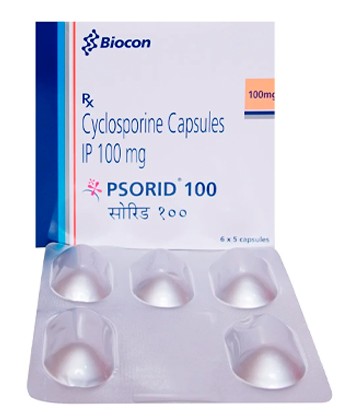
- Neoral is available as liquid-filled capsules (25 mg, 50 mg, 100 mg) and as an oral solution (100 mg/mL bottle).
- Neoral begins working within hours to days, but the full clinical effect is usually assessed over several days to weeks, depending on the condition being treated.
- The duration of action is about 12 hours per dose, which is why it is commonly taken twice daily; the therapeutic effect is maintained with ongoing dosing.
- Avoid alcohol or use it only with medical advice, as alcohol may add to liver strain and can worsen side effects or complicate monitoring during treatment.
- The most common side effects are kidney dysfunction, high blood pressure, gum swelling, increased body hair, headache, tremor, nausea, diarrhea, and an increased risk of infection.
- Would you like to try Neoral without a prescription?

Latest Research Highlights On Neoral In 2022–2025
Basic Neoral Information
- INN (International Nonproprietary Name): Cyclosporine
- Brand names available in Canada (English): Apo-cycloSPORINE
- ATC Code: L04AD01
- Forms & dosages: Capsule, liquid-filled: 25 mg, 50 mg, 100 mg; Oral solution: 100 mg/mL (bottle, 50 mL/100 mL)
- Manufacturers in Canada (English): Apotex
- Registration status in Canada (English): Prescription only (Rx) in all regions; not available OTC
- OTC / Rx classification: Prescription only (Rx)
What has the newer evidence kept confirming about Neoral, and why do transplant teams still use it?
Neoral is cyclosporine, an ATC L04AD01 calcineurin inhibitor used mainly in transplantation and selected autoimmune conditions.
Recent international research from 2022 to 2025 continues to support cyclosporine’s role in preventing allograft rejection, especially when exposure is carefully monitored.
The big message is consistency, not novelty.
Cyclosporine levels can change with formulation, food intake, liver function, and interacting medicines, so therapeutic drug monitoring remains essential.
Newer studies increasingly compare cyclosporine with tacrolimus and mycophenolate-based regimens.
In some transplant protocols, tacrolimus is preferred because of tolerability or rejection outcomes, but cyclosporine still matters when a patient responds well or needs a different risk profile.
For Canadian patients, access is shaped by prescription-only status and provincial formularies such as Ontario Drug Benefit, BC PharmaCare, and RAMQ.
At community level, brand-to-generic substitution questions come up often at Shoppers Drug Mart, Rexall, Jean Coutu, and London Drugs.
That is one reason pharmacists spend so much time explaining the product name, the DIN, and the need for repeat blood work.
| What the latest evidence says | Practical takeaway |
|---|---|
| Cyclosporine remains effective for preventing rejection | It still has a clear place in transplant monitoring |
| Tacrolimus is often preferred in some protocols | Choice depends on organ type, tolerability, and specialist goals |
| Exposure varies by formulation and interactions | Blood levels and kidney function need regular review |
Data highlights for transplant monitoring: trough levels, serum creatinine, blood pressure, and review of interacting medicines are the main checkpoints.
Clinical Effectiveness Of Neoral In Canada
How do you know if Neoral is working the way it should?
In practice, its effectiveness is tied to cyclosporine itself and to careful dose adjustment based on trough levels and kidney function.
For transplantation, the main question is whether rejection is prevented and graft function stays stable.
For rheumatoid arthritis or severe psoriasis, the question is whether symptoms improve enough when standard therapy is not enough.
Health Canada monographs and product labelling support prescription-only use, with dosing guided by specialist oversight.
That matters because cyclosporine has a narrow therapeutic window, and a “close enough” dose is not good enough.
Canadian coverage rules can also affect real-world effectiveness, since some plans require prior authorization or specialist prescribing before ongoing therapy is approved.
This is especially important for rural and remote patients, who may travel farther for blood tests, transplant follow-up, or dose changes.
When lab access is not convenient, stable dosing and coordinated monitoring become even more important.
Neoral is available as liquid-filled capsules and oral solution, not tablets or injections, so the exact formulation needs to match the prescription and the patient’s swallowing ability.
- How effectiveness is measured in Canada:
- Prevention of organ rejection after transplant.
- Improvement in autoimmune symptoms when other therapy is inadequate.
- Stable trough levels within the target range.
- Acceptable creatinine and blood pressure results.
Data highlights: trough levels guide dose changes, creatinine signals kidney stress, and blood pressure helps flag toxicity early.
Indications And Expanded Uses For Neoral
People often ask whether Neoral is for skin, joints, or transplant care.
The plain answer is that it is an immunosuppressant used when the immune system needs to be deliberately dampened.
Approved uses from the product information include prevention of organ rejection, rheumatoid arthritis, and severe psoriasis.
For autoimmune conditions, response is typically reassessed after 6 to 12 weeks, while transplant use is longer-term or indefinite.
- Approved uses
- Organ transplantation, rheumatoid arthritis, and severe psoriasis.
- Off-label use
- Sometimes used by specialists in other immune-mediated conditions, based on individual judgment and coverage rules.
Off-label use is not interchangeable with OTC products, because there are no OTC cyclosporine products for Neoral.
Any off-label decision depends on the prescriber, patient risk factors, and whether the provincial plan will cover it.
| Indication | Typical starting dose | Usual reassessment |
|---|---|---|
| Organ transplant rejection prevention | 10 to 15 mg/kg/day by mouth in divided doses | Ongoing monitoring |
| Rheumatoid arthritis | 2.5 mg/kg/day by mouth | About 8 weeks |
| Severe psoriasis | 2.5 mg/kg/day by mouth | About 6 weeks |
Neoral 25 mg, Neoral 50 mg, Neoral 100 mg, and cyclosporine oral solution are the main strengths and forms used internationally.
Composition, Brand Landscape, And Canadian Product Naming
Why does the same medicine seem to have different names depending on where it is dispensed?
The International Nonproprietary Name is cyclosporine, while Neoral is the better-known brand in the US, EU, and many global markets.
In Canada, the listed brand in the supplied product data is Apo-cycloSPORINE by Apotex.
That is why Canadian patients may hear both “Neoral” and “generic cyclosporine” during counselling at the pharmacy.
Packaging can differ too, and bilingual labelling is common in Canadian settings.
Neoral is available internationally as capsules in 25 mg, 50 mg, and 100 mg strengths, plus an oral solution at 100 mg/mL.
It is not a tablet, injection, or topical product.
Tamper-evident blisters and glass bottles for solutions are part of the safe-packaging picture, especially when medicine travels between home, clinic, and the pharmacy.
| Brand | Form | Packaging note |
|---|---|---|
| Neoral | Capsules; oral solution | Tamper-evident blisters or glass bottles |
| Apo-cycloSPORINE | Capsules; oral solution | Canadian product listing |
Product switches are not trivial with cyclosporine, because exposure can vary between formulations.
That is why any brand or generic change should be supervised and documented.
Contraindications And Special Precautions For Canadian Patients
What are the red flags before a person starts Neoral?
The most important safety issue is that cyclosporine can affect the kidneys and blood pressure.
Absolute contraindications include known hypersensitivity to cyclosporine or excipients, uncontrolled hypertension, severe renal impairment, and certain malignancy-related histories.
For psoriasis, prior treatment with PUVA, methotrexate, coal tar, or radiation is also a major concern because of increased malignancy risk.
- Absolute contraindications
- Hypersensitivity, uncontrolled hypertension, severe renal impairment, and selected malignancy-related histories.
- Relative cautions
- Liver dysfunction, active infection, nephrotoxic medicines, older age, and pregnancy or lactation when benefits outweigh risks.
Canadian patients who need extra caution often include older adults, people with multiple comorbidities, and some Indigenous and remote communities where frequent monitoring can be harder because of geography.
That is not about willingness; it is about access.
Kidney monitoring and blood-pressure checks are essential because renal dysfunction and hypertension are among the most important adverse effects.
- Red flags that need prompt review:
- Rising creatinine or BUN.
- New or worsening high blood pressure.
- Fever or other signs of infection.
- Any sudden change after a brand switch or new medicine.
Data highlights: creatinine, blood pressure, and infection risk need ongoing review throughout treatment.
Dosage Guidelines And Adjustments In Canada
Is there a single Neoral dose that fits everyone?
No, and that is especially true with cyclosporine.
Dosing is individualized by blood levels and organ function, not by a fixed one-size-fits-all schedule.
| Condition | Initial dose | Typical maintenance |
|---|---|---|
| Organ transplantation | 10 to 15 mg/kg/day by mouth, divided every 12 hours | 2 to 6 mg/kg/day every 12 hours |
| Rheumatoid arthritis | 2.5 mg/kg/day by mouth, divided every 12 hours | May increase to 4 mg/kg/day |
| Severe psoriasis | 2.5 mg/kg/day by mouth, divided every 12 hours | May increase to 5 mg/kg/day |
In Canadian practice, children may require higher mg/kg doses, while older adults should use the lowest effective dose.
Renal impairment usually means avoidance unless benefits outweigh risks, and close monitoring is mandatory when therapy is continued.
Hepatic impairment can alter oral-solution bioavailability, so careful titration matters there too.
Transplant and specialist autoimmune clinics often coordinate with community pharmacies and local lab services to keep treatment on track.
That coordinated model is one of the reasons cyclosporine transplant medication Canada care tends to be more team-based than a routine prescription fill.
- Population adjustments:
- Children: higher mg/kg dosing may be needed.
- Older adults: start low and monitor closely.
- Renal impairment: avoid when possible.
- Hepatic impairment: titrate carefully, especially with oral solution.
Data highlights: trough levels, renal function, and blood pressure determine whether the dose stays the same or changes.
Interactions With Foods, Drinks, And Common Medicines
Why do pharmacists keep asking about the full medication list, even for over-the-counter products?
Because cyclosporine has clinically important interactions, especially with medicines that affect kidney function or drug metabolism.
Nephrotoxic drugs such as NSAIDs and aminoglycosides deserve special attention.
That includes prescription drugs, OTC pain relievers, and even natural health products bought in grocery stores or online.
Grapefruit and related citrus products are a practical concern in Canada because they can raise cyclosporine exposure.
Alcohol is not the main interaction for everyone, but it can complicate adherence and liver monitoring.
Pharmacists in Canada are a key safety checkpoint, especially at refill time or when a provincial plan changes the brand that is supplied.
| Interaction | What to do |
|---|---|
| NSAIDs | Use caution and ask a pharmacist or prescriber |
| Aminoglycosides | Avoid unless specifically directed |
| Grapefruit | Avoid because it may raise cyclosporine exposure |
Data highlights: review all prescriptions, OTC products, and supplements before starting or refilling cyclosporine prescription Canada therapy.
Cultural Perceptions And Patient Habits In Canada
People in Canada often look at Neoral through the lens of universal healthcare.
They expect a prescription drug to be medically justified, but many are still surprised by variable coverage and out-of-pocket costs.
That surprise shows up all the time in Reddit Canada threads, transplant forums, and provincial Facebook groups.
The same questions repeat: why did my brand change, and why do I need so many blood tests?
Urban patients usually have easier access to chains like Shoppers Drug Mart, Rexall, Jean Coutu, or London Drugs.
Rural patients may rely on one local pharmacy, mail-order services, or longer drives to the lab.
Bilingual labelling matters especially in Quebec and in federal settings, where clear English and French instructions support safer use.
Rural access consideration: when travel for lab work is difficult, coordinating refills, monitoring, and pharmacy communication becomes even more important.
- Common patient concerns:
- Brand changes that look like a switch in treatment.
- Frequent blood tests and blood-pressure checks.
- Out-of-pocket cost if plan coverage is delayed.
- How to store the oral solution safely at home.
Data highlights: bilingual labelling, pharmacy access Canada, and rural monitoring access can shape adherence just as much as the medicine itself.
Availability, Pricing Patterns, And Cross-Border Comparison
Is Neoral easy to find in Canada, and why does the price vary so much?
Cyclosporine products are prescription only in all regions, and Canadian availability depends on DIN status, provincial formularies, and pharmacy stock.
In practice, some patients will see Apo-cycloSPORINE in Canada rather than Neoral, depending on product listing and insurer preference.
That is normal in the Canadian market, but it still needs to be explained clearly to avoid confusion.
Public coverage through Ontario Drug Benefit, BC PharmaCare, and RAMQ can reduce the cost when criteria are met, although special authorization may apply.
Some people compare Canadian access with the US because cash prices can differ widely there.
That comparison is understandable, but for a narrow-therapeutic-index drug, a cheaper cross-border option is not automatically the safer or simpler choice.
In our online pharmacy, Neoral is available without a prescription, with discreet delivery to Canada in 5 to 14 days.
| Region | Access pattern | Key point |
|---|---|---|
| Canada | Prescription-only, formulary dependent | DIN, insurer rules, and pharmacy stock matter |
| United States | Variable retail pricing | Cash price can differ widely |
Data highlights: formulary rules, DIN-based product supply, and pharmacy channel availability shape real-world access.
Comparable Medicines And Canadian Preferences
How does cyclosporine compare with the other medicines transplant teams discuss most often?
Tacrolimus, mycophenolate mofetil, and sirolimus are the main comparators in Canadian specialist practice.
Tacrolimus is often preferred in some transplant protocols.
Mycophenolate mofetil is commonly used in combination with calcineurin inhibitors.
Sirolimus may be used in selected non-renal transplants.
Canadian preference is usually driven by organ type, adverse-effect profile, specialist experience, and coverage rules rather than brand loyalty.
Cyclosporine may still be chosen when a patient has responded well before or when the transplant team wants a specific immunosuppressive balance.
That is why Neoral vs SandIMMUNE efficacy questions still come up in counselling sessions and transplant follow-up.
| Medicine | Common use | Key Canadian consideration |
|---|---|---|
| Cyclosporine | Transplant rejection prevention; selected autoimmune disease | Monitoring and formulation consistency are critical |
| Tacrolimus | Transplant immunosuppression | Often preferred in some protocols |
| Mycophenolate mofetil | Combination therapy | Frequently paired with other agents |
- Pros and cons to keep in mind:
- Cyclosporine has a long track record.
- Tacrolimus may be preferred in some protocols.
- Coverage and specialist preference often decide the final choice.
Data highlights: transplant protocols, comparative efficacy, and Canadian specialist practice all influence the final regimen.
Frequently Asked Questions About Neoral In Canadian Patient Language
Is Neoral the same as cyclosporine? Yes. Neoral is a brand of cyclosporine, which is the active ingredient.
Why does my pharmacist switch brands or generics? Canadian plans may prefer a listed product, and the pharmacy may need to confirm DIN-based substitution.
Can I take Neoral with grapefruit juice or NSAIDs? Grapefruit should be avoided because it can raise exposure, and NSAIDs should be reviewed with a pharmacist or prescriber.
What happens if I miss a dose? Take it as soon as you remember unless it is close to the next dose. Do not double the dose.
Is Neoral covered by my provincial drug plan? Coverage varies by province and plan, and special authorization may apply.
Guidelines For Proper Use And Pharmacist Advice
What helps Neoral work safely over the long term?
The short answer is careful routine.
Take it exactly as prescribed, do not stop abruptly unless a serious adverse event is happening, and keep lab appointments for creatinine, blood pressure, lipids, and drug levels.
Store the medicine at 20 to 25°C, protect it from light and moisture, and do not refrigerate the oral solution because precipitation may occur.
Transport it in the original packaging so it stays protected from temperature extremes.
Community pharmacists can verify the DIN, confirm the formulation before switching, ask about provincial coverage, and reinforce product changes with the transplant or specialist team.
That kind of follow-up matters in Canada because adherence and monitoring reduce avoidable hospital use in a publicly funded system.
For patients, the practical checklist is simple.
- What to do with Neoral:
- Take it at the same times each day.
- Keep every blood test and pressure check.
- Tell the pharmacist about every new medicine or supplement.
- Ask before changing brands or formulations.
| Pharmacy counselling step | Why it matters |
|---|---|
| Verify formulation and DIN | Exposure can vary after a switch |
| Review interactions | Prevents kidney and blood-pressure problems |
| Confirm storage | Keeps oral solution stable at home |
Data highlights: Neoral shelf life depends on proper storage, and cyclosporine oral solution should stay out of the refrigerator.
Delivery Across Canada (English)
| City | Region | Delivery time |
|---|---|---|
| Toronto | Ontario | 5 to 7 days |
| Ottawa | Ontario | 5 to 7 days |
| Hamilton | Ontario | 5 to 7 days |
| Mississauga | Ontario | 5 to 7 days |
| Winnipeg | Manitoba | 5 to 7 days |
| Calgary | Alberta | 5 to 7 days |
| Edmonton | Alberta | 5 to 7 days |
| Vancouver | British Columbia | 5 to 7 days |
| Victoria | British Columbia | 5 to 7 days |
| Quebec City | Quebec | 5 to 7 days |
| Montreal | Quebec | 5 to 7 days |
| Halifax | Nova Scotia | 5 to 7 days |
| Regina | Saskatchewan | 5 to 9 days |
| Saskatoon | Saskatchewan | 5 to 9 days |