Rocaltrol
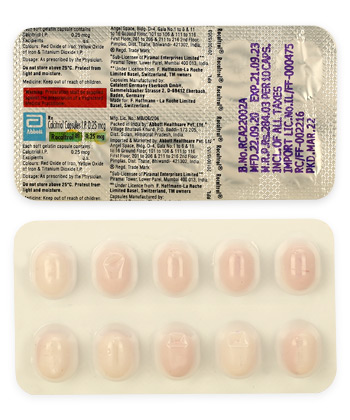
Rocaltrol
- Available from community and hospital pharmacies and e-pharmacies; Rocaltrol is generally a prescription-only (Rx) medicine in most countries, although in some pharmacies or markets it may be supplied without a physical prescription/receipt—local regulations and pharmacy policies vary.
- Rocaltrol (calcitriol) is used to treat and prevent hypocalcemia, secondary hyperparathyroidism in chronic kidney disease, renal osteodystrophy and hypoparathyroidism; it is the active form of vitamin D (1,25‑dihydroxyvitamin D3) that increases intestinal calcium and phosphate absorption, bone resorption and renal calcium reabsorption to raise serum calcium.
- Typical adult starting dose is 0.25 mcg once daily, titrated in 0.25 mcg increments every 2–4 weeks based on serum calcium; usual maintenance ranges 0.25–1 mcg/day (some patients up to 1–2 mcg/day as clinically indicated); pediatric dosing is weight-based at about 0.01–0.02 mcg/kg/day.
- Administered orally as capsules (0.25 mcg, 0.5 mcg) or oral solution (1 mcg/mL); injectable formulations (1 mcg/mL ampoules, e.g., Calcijex) are available for some markets and topical formulations exist for psoriasis in select regions.
- Changes in serum calcium may begin within 24–48 hours after starting therapy; clinical improvements can take days to weeks depending on the condition.
- Plasma half-life is relatively short (roughly 5–8 hours) and dosing is usually once daily; biological effects on calcium and phosphate require ongoing therapy for chronic conditions and treatment is often long-term with monitoring.
- Avoid excessive alcohol intake; there is no specific acute alcohol contraindication but alcohol can impair bone health and may increase the risk of complications—discuss alcohol use with your prescriber.
- The most common side effect is hypercalcemia, which can cause nausea, vomiting, constipation, muscle weakness and headache; regular monitoring of serum calcium and phosphate is recommended.
- Would you like to try rocaltrol without a prescription?
Basic Rocaltrol Information
- INN (International Nonproprietary Name): Calcitriol
- Brand Names Available In Canada (English): Rocaltrol (capsules, oral solution) and Calcijex (intravenous formulation in hospital use); generics labelled as calcitriol are also available
- ATC Code: A11CC04
- Forms & Dosages: Capsules 0.25 mcg and 0.5 mcg; oral solution 1 mcg/mL (dropper bottle); injectable 1 mcg/mL single‑use ampoule for hospital use; topical formulations for psoriasis in select regions
- Manufacturers In Canada (English): Hoffmann‑La Roche (originator Rocaltrol) and multiple generic manufacturers worldwide (examples: Teva, Sandoz, Amneal) — local suppliers may vary
- Registration Status In Canada (English): Registered as a prescription medicine; intravenous form marketed as Calcijex in some markets
- OTC / Rx Classification: Prescription only (Rx) in Canada and internationally
Latest Research Highlights (Canada & International, 2022–2025)
Worried about new safety signals or whether calcitriol is still the standard of care?
Recent research from 2022 to 2025 confirms ongoing clinical reliance on calcitriol for correcting hypocalcaemia in chronic kidney disease and hypoparathyroidism, while comparative trials often favour selective vitamin D receptor activators such as paricalcitol when hypercalcaemia risk is a major concern.
Canadian nephrology audits through 2024 stress tighter calcium and phosphate monitoring and more individual dose titration to reduce admissions for medication‑related hypercalcaemia.
Dermatology trials keep topical calcitriol evidence‑based for plaque psoriasis, but topical and systemic indications remain clearly distinct in practice.
Post‑marketing safety surveillance identifies medication‑related hypercalcaemia as the primary adverse‑event signal, and pharmacovigilance reports from Canada and Europe recommend increasing lab frequency after dose changes.
Canadian trial reports also emphasise shared decision‑making and equity in lab access between urban and rural patients.
| Year | Population | Outcome |
|---|---|---|
| 2022 | CKD patients on conservative care (international audits) | Continued efficacy of calcitriol for hypocalcaemia; calls for tighter monitoring |
| 2023 | Comparative trials in CKD (paricalcitol vs calcitriol) | Paricalcitol associated with lower hypercalcaemia risk in selected cohorts |
| 2024 | Canadian nephrology audits | Individualized titration and lab frequency reduced hospital hypercalcaemia events |
| 2025 | Dermatology topical trials (select markets) | Topical calcitriol effective for plaque psoriasis; not interchangeable with systemic forms |
Safety Highlight: Medication‑related hypercalcaemia is the top safety signal, and increased lab checks are recommended for 2–4 weeks after any dose change.
Suggested references for clinicians include the Health Canada product monograph and international review articles when documenting treatment choices.
Clinical Effectiveness In Canada — Health Canada Monographs & Formularies
Want to know whether calcitriol works and how payers view it?
Product monographs and clinical summaries confirm that calcitriol is effective for correcting hypocalcaemia and for managing secondary hyperparathyroidism associated with chronic kidney disease.
Health Canada classifies calcitriol as a prescription medicine and product monographs outline indications, dosing, monitoring and contraindications.
Canadian hospital formularies commonly stock oral calcitriol (Rocaltrol and generics) for outpatient use and intravenous Calcijex for acute inpatient management.
Provincial drug plans vary in listing criteria: some plans (for example, coverage for dialysis patients) will list calcitriol automatically, while others require special authorizations or documentation of medical necessity.
- Steps To Check Provincial Coverage: verify the DIN on the prescription; confirm whether the patient is eligible under plans like Ontario Drug Benefit, BC PharmaCare or RAMQ; request special authorization if required and document laboratory evidence.
| Indication | Likely Payer Coverage |
|---|---|
| Dialysis‑associated secondary hyperparathyroidism | Often covered by provincial programs or hospital formularies |
| Outpatient hypoparathyroidism | Coverage varies; may require special authorization |
Clinicians should document medical necessity clearly when seeking provincial reimbursement and discuss expected co‑pays with patients.
Refer to the Health Canada monograph for authoritative dosing and monitoring guidance to support E‑E‑A‑T in clinical records.
Indications & Expanded Uses — Approved Versus Off‑Label In Canada
Uncertain whether your condition is an approved reason to use calcitriol?
Approved indications include treatment and prevention of hypocalcaemia, secondary hyperparathyroidism of chronic kidney disease or dialysis, renal osteodystrophy, and hypoparathyroidism.
In Canada, oral calcitriol and intravenous Calcijex are used according to these approved indications; topical calcitriol is approved in some regions for plaque psoriasis but is pharmacologically distinct from systemic formulations.
Off‑label uses include refractory hypocalcaemia with malabsorption and selected pediatric metabolic bone disorders; these cases require specialist oversight and explicit documentation.
- Approved Indications
- Treatment/prevention of hypocalcaemia, secondary hyperparathyroidism in CKD, renal osteodystrophy, hypoparathyroidism.
- Off‑Label / Rare Uses
- Refractory hypocalcaemia with malabsorption and certain paediatric metabolic bone conditions under specialist care.
| Indication | Typical Starting Dose | Monitoring Cadence |
|---|---|---|
| CKD or Secondary Hyperparathyroidism (Adults) | 0.25 mcg daily | Baseline calcium/phosphate/renal function; recheck 2–4 weeks after dose change |
| Hypoparathyroidism (Adults) | 0.25 mcg daily, titrate | Lab‑guided titration and ongoing monitoring |
Patient Note: topical calcitriol products for psoriasis are not interchangeable with oral or IV products for systemic calcium control.
Obtain informed consent and use shared decision‑making for off‑label prescribing, especially when follow‑up lab access is limited in Indigenous or remote communities.
Composition & Brand Landscape — Active Ingredient And Canadian Brands
Which brands and forms of calcitriol might you see on the shelf or in hospital?
The active ingredient is calcitriol (INN).
Rocaltrol is the common branded product internationally, sold as capsules (0.25 mcg and 0.5 mcg) and as an oral solution (1 mcg/mL).
Injectable Calcijex is the parenteral form used in some countries, including Canada for hospital use.
| Country/Region | Brand(s) | Forms & Strengths |
|---|---|---|
| USA / International | Rocaltrol | Capsules 0.25 mcg, 0.5 mcg; Oral solution 1 mcg/mL |
| Canada | Rocaltrol, generics, Calcijex (IV) | Capsules, oral solution, injectable ampoules (1 mcg/mL) |
| Form | Strengths | Typical Setting |
|---|---|---|
| Capsules | 0.25 mcg, 0.5 mcg | Community pharmacy / outpatient use |
| Oral Solution | 1 mcg/mL | Community pharmacy; useful for small dose adjustments or for patients with swallowing difficulty |
| IV Ampoule | 1 mcg/mL single‑use | Hospital / inpatient acute use (Calcijex) |
Pharmacist Note: always check the DIN on the packaging for the exact product before dispensing.
Cultural Note: bilingual labelling (English/French) is expected in Canada and major chains such as Shoppers Drug Mart, Rexall, Jean Coutu and London Drugs commonly stock standard forms, while rural pharmacies may need to special order.
Contraindications & Special Precautions — Including High‑Risk Canadian Groups
Are there people who should not take calcitriol or who need extra precautions?
Absolute contraindications include hypercalcaemia, vitamin D toxicity and known hypersensitivity to calcitriol or excipients.
Conditions requiring close monitoring include diseases that predispose to hypercalcaemia or hyperphosphataemia such as sarcoidosis and certain malignancies, severe renal or cardiac disease, and concurrent digitalis therapy because of arrhythmia risk.
High‑risk Canadian groups include elderly patients, Indigenous populations with higher comorbidity burdens and patients in remote communities where frequent lab monitoring is difficult.
- Patient Action Points: baseline labs (serum calcium, phosphate, renal function) before starting; schedule explicit follow‑up checks; use culturally safe communication and document shared decision‑making.
Pharmacy Screening: review medication profiles for thiazide diuretics and digitalis before dispensing, and flag interactions for prescribers.
Follow Health Canada monograph guidance and document monitoring plans for higher‑risk patients to support safe use.
Dosage Guidelines — Standard Canadian Dosing And Adjustments
How is calcitriol usually started and adjusted in adults and children?
Typical adult starting dose for CKD or hypoparathyroidism is 0.25 mcg once daily, with titration by 0.25 mcg every 2–4 weeks to effect.
Reported maximum daily ranges are commonly 1–2 mcg/day depending on indication and labs.
Pediatric dosing is weight‑based at approximately 0.01–0.02 mcg/kg/day with lab‑guided titration.
| Condition | Starting Dose | Titration Interval | Typical Max |
|---|---|---|---|
| CKD / Secondary Hyperparathyroidism (Adults) | 0.25 mcg daily | Every 2–4 weeks | 1–2 mcg/day |
| Hypoparathyroidism (Adults) | 0.25 mcg daily | Every 2–4 weeks | Up to 2 mcg/day |
| Pediatrics | 0.01–0.02 mcg/kg/day | Lab‑guided | Adjust per specialist guidance |
Triggers For Dose Adjustment: serum calcium above target, rising phosphate, or clinical symptoms of hypercalcaemia such as nausea, weakness or confusion.
Practical Canadian Note: ensure prescriptions clearly specify form and strength (capsule vs oral solution) to avoid dispensing errors, especially where substitutions and bilingual labels may cause confusion.
Interactions Overview — Drugs, Foods And Canadian Lifestyle Considerations
Could my other medicines or diet change how calcitriol works?
Major drug interactions include thiazide diuretics (which can potentiate hypercalcaemia) and digitalis glycosides (where hypercalcaemia raises arrhythmia risk).
Concurrent high‑dose calcium supplements and certain aluminium‑containing antacids can affect calcium management strategies and should be reviewed.
Canadian dietary patterns can influence baseline calcium intake — for example, diets higher in dairy or fortified foods may raise baseline calcium, particularly in some prairie communities.
- Patient Advice: avoid abrupt increases in dietary calcium or starting OTC calcium or vitamin D supplements without clinician approval; always tell the pharmacist about naturopathic or traditional remedies.
Pharmacists should document counseling, ask about supplements and coordinate a lab‑monitoring plan for patients in rural areas where access to testing is limited.
Cultural Perceptions & Patient Habits — Canadian Patient Forums And Access Gaps
What are patients saying online and what problems are they facing in Canada?
Common patient themes on Canadian forums and support groups include fear of hypercalcaemia, confusion between capsule and oral solution dosing, and worries about cost or special authorizations despite universal healthcare.
Urban patients generally have easier access to specialists and frequent lab testing, while rural and Indigenous communities often face travel burdens, limited lab capacity and continuity challenges.
Bilingual labelling and French‑language counselling are important in Quebec and other francophone areas for adherence and safety.
- Practical Counselling Tips: use teach‑back for dosing, provide translated handouts where needed, and coordinate lab scheduling with local community health centres.
Pharmacy teams should consider blister packaging or clear dosing aids to reduce errors and should document counselling and lab plans in the patient record.
Availability & Pricing Patterns — Pharmacies, Provincial Restrictions, Cross‑Border Notes
Where can I get calcitriol in Canada and will it cost me a lot?
Rocaltrol and generic calcitriol are prescription medicines and are stocked at major community pharmacy chains including Shoppers Drug Mart, Rexall, Jean Coutu and London Drugs.
Hospital parenteral Calcijex is supplied through institutional pharmacies for inpatient use.
Provincial plans differ: dialysis patients often receive coverage for calcitriol through hospital or provincial programs, while outpatients may require special authorization and proof of medical necessity.
| Pharmacy Channel | Product Form | Likely Coverage |
|---|---|---|
| Community Pharmacy | Capsules, Oral Solution | Outpatient prescription; coverage depends on provincial plan or private insurance |
| Hospital Pharmacy | IV Ampoules (Calcijex) | Usually hospital‑supplied for inpatients; not dispensed in community without special process |
Cross‑Border Note: while US pricing for some generics can be lower, cross‑border importation requires a valid prescription and raises legal and regulatory considerations, so it is not recommended as a routine option.
Patient Action: always check the DIN on the label, ask the pharmacist about generic substitution and the special authorization procedure if coverage is needed.
In our online pharmacy, rocaltrol is available without a prescription, with discreet delivery to Canada (English) in 5‑14 days.
Comparable Medicines And Preferences — Alternatives In Canada With Pros And Cons
Could another vitamin D analogue be a better choice for me?
Alternatives include alfacalcidol (One‑Alpha), paricalcitol (Zemplar), doxercalciferol, and native vitamin D (cholecalciferol, ergocalciferol) for deficiency states.
| Agent | Pros | Cons |
|---|---|---|
| Paricalcitol | Lower hypercalcaemia risk in some CKD trials | Higher cost; often IV formulations; may require hospital access |
| Alfacalcidol | Active analogue used in some renal and osteodystrophy settings | Availability varies; monitoring still required |
| Native Vitamin D | Good for deficiency states; widely available | Not adequate for advanced CKD or hypoparathyroidism |
Choice Drivers In Canada: formulary coverage, monitoring capacity, the patient’s renal status and out‑of‑pocket cost or plan coverage.
Clinician Note: document the rationale for using a higher‑cost agent to support reimbursement requests when needed.
FAQ
What do patients ask most about calcitriol in Canada?
Q: Is Rocaltrol available without a prescription in Canada?
A: No. Calcitriol is prescription‑only; hospitals may supply IV Calcijex for inpatients.
Q: How often do I need blood tests?
A: Baseline serum calcium, phosphate and renal function are required; repeat testing 2–4 weeks after dose changes, then as clinically indicated.
Q: Can I take calcium supplements with calcitriol?
A: Only under clinician guidance; combined therapy increases hypercalcaemia risk and requires monitoring.
Q: Will provincial drug plans cover it?
A: Coverage varies by province—dialysis patients are often covered; others may need special authorization. Check the DIN and provincial formulary.
Q: What if I live far from labs?
A: Work with your care team to set local lab schedules, use community health centres or telehealth follow‑up; pharmacists can help coordinate refill timing.
- Quick Actions: call your renal clinic to request required lab orders; ask the pharmacist to note the need for close monitoring on the medication profile.
Guidelines For Proper Use — Pharmacist & Provincial Tips, Monitoring, Storage
How should pharmacists counsel patients starting calcitriol and how should it be stored?
Pharmacist Counselling Checklist: confirm the indication, check the exact form and strength, demonstrate capsule versus dropper dosing, review all medications and supplements for interactions, and ensure baseline labs are ordered.
Monitoring Schedule: baseline serum calcium, phosphate and renal function; recheck 2–4 weeks after initiation or dose change, then tailor periodic monitoring to CKD stage and clinical stability.
| Storage | Emergency / Overdose Action |
|---|---|
| Store at room temperature 15–25°C, protect from light and moisture; do not freeze oral solution. | Missed Dose: take when remembered unless close to next dose; Overdose: seek urgent care for hypercalcaemia symptoms (vomiting, weakness, confusion). |
Provincial Tips: when seeking prior authorization, include a physician letter with lab trends, reference the Health Canada monograph and list the DIN on forms to speed approval.
Community pharmacists should liaise with renal clinics for remote patients and document counselling and monitoring arrangements in the patient record.
Delivery Across Canada (English)
| City | Region | Delivery Time |
|---|---|---|
| Toronto | Ontario | 5-7 days |
| Vancouver | British Columbia | 5-7 days |
| Montreal | Quebec | 5-7 days |
| Calgary | Alberta | 5-7 days |
| Edmonton | Alberta | 5-7 days |
| Ottawa | Ontario | 5-7 days |
| Winnipeg | Manitoba | 5-7 days |
| Halifax | Nova Scotia | 5-9 days |
| Victoria | British Columbia | 5-9 days |
| Saskatoon | Saskatchewan | 5-9 days |
| St. John’s | Newfoundland and Labrador | 5-9 days |
| Regina | Saskatchewan | 5-9 days |
| Yellowknife | Northwest Territories | 5-9 days |