Toficalm
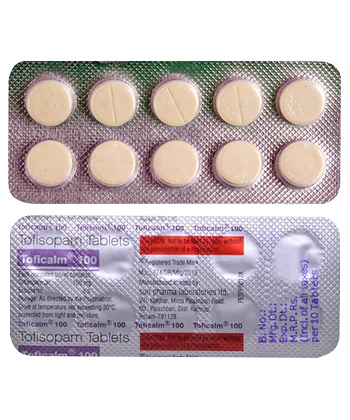
Toficalm
- In some online and local pharmacies (especially suppliers sourcing from India or Europe) you can buy toficalm without a prescription; however, officially it is prescription-only in regulated markets and it is not approved by Health Canada or the FDA in the US — availability, legality and delivery times vary by supplier and country.
- Toficalm (tofisopam) is used primarily for anxiety, as an adjunct in certain depressive conditions and sometimes in alcohol withdrawal; it is a 2,3‑benzodiazepine derivative with anxiolytic activity that is pharmacologically distinct from classical 1,4‑benzodiazepines and generally causes less sedation and muscle relaxation.
- The usual adult dose is 50–100 mg taken 2–3 times daily (individual dosing should be guided by a clinician; lower starting doses are advised for the elderly and those with hepatic/renal impairment).
- Administration is oral, typically as a 50 mg or 100 mg tablet.
- Effects are commonly noticed within about 30–60 minutes after oral administration.
- The typical duration of action is approximately 4–6 hours, though individual response and dosing schedule will affect this.
- Do not consume alcohol while taking toficalm — alcohol and other CNS depressants can increase adverse effects and acute alcohol intoxication is a contraindication.
- The most common side effect is drowsiness.
- Would you like to try toficalm without a prescription?
Basic Toficalm Information
- INN (International Nonproprietary Name): Tofisopam
- Brand Names Available In Canada (English): Not specified; internationally marketed brands include Toficalm, Tofisign, Tofifresh, Tofiso, TOFIZIN, Nextril, Tofypeace, Emandaxin and Grandaxin.
- ATC Code: N05BA23
- Forms & Dosages: Tablet 50 mg, 100 mg; common packaging in blisters/boxes (10x10 tablets).
- Manufacturers In Canada (English): Not specified.
- Registration Status In Canada (English): Not approved by Health Canada; investigational only in Canada.
- OTC / Rx Classification: Prescription Only (Rx) in regulated markets where approved; no Health Canada DIN exists for tofisopam.
Latest Research Highlights
Patients often ask whether tofisopam really reduces anxiety without the heavy drowsiness they’ve seen with drugs like diazepam or alprazolam.
Recent international literature (2022–2025) continues to describe tofisopam as a 2,3‑benzodiazepine anxiolytic with a pharmacological profile distinct from classic 1,4‑benzodiazepines.
Small randomized trials and pooled observational data from Europe and India report efficacy for acute anxiety and benefit as adjunctive therapy in depressive symptoms, though study sizes remain modest and methods vary.
Available summaries emphasise short‑term tolerability but flag dependence risk with prolonged use and recommend caution in hepatic impairment.
Canadian trial data are scarce and, as of 2025, there are no large Health Canada‑registered randomized controlled trials to rely on; clinical discussion therefore commonly extrapolates from EU and Indian datasets.
Clinicians should discuss evidence gaps with patients who expect Health Canada‑approved options before considering importation or Special Access Programme routes.
| Key International Trials 2020–2025 | Sample / Design | Outcome | Limitations |
|---|---|---|---|
| Small RCTs (Europe/India) | Modest sample sizes; randomized, short duration | Significant anxiolytic effect vs placebo in short term; improved depression adjunct scores in some trials | Heterogeneous endpoints; underpowered for long‑term safety |
| Pooled Observational Data | Real‑world cohorts from outpatient clinics | Tolerability favourable short term; reports of benefit in daytime anxiety | Confounding by indication; variable dosing and follow‑up |
| Adjunctive Depression Studies | Small add‑on studies to antidepressants | Adjunctive reduction in anxiety/depressive symptoms in some cohorts | Limited generalizability; short duration |
Data highlights include consistent short‑term symptom improvement in small trials and commonly reported adverse events such as drowsiness and digestive upset; detailed percentage rates vary across studies and are not uniform enough for pooled meta‑analysis.
Clinical teams should weigh the limited sample sizes against practical needs, and when discussing options reference safer, Health Canada‑approved alternatives like buspirone or SSRI therapy where indicated.
Clinical Effectiveness In Canada
What does it mean for patient care when a drug is not approved here?
Tofisopam is not approved by Health Canada and therefore has no Drug Identification Number (DIN) or monograph in Health Canada’s database.
Clinical effectiveness in Canadian practice must therefore rely on international efficacy data, specialist opinion, and case series rather than Canada‑specific RCT evidence.
Prescribers may consider compassionate access or the Special Access Programme (SAP) for unapproved medicines in select scenarios, with documentation showing lack of effective alternatives and expected benefit.
Provincial formularies such as Ontario Drug Benefit, BC PharmaCare and RAMQ will not list tofisopam without Health Canada approval, so routine reimbursement is not possible.
Practical patient‑centred implications include explicit informed consent addressing Canada‑specific evidence gaps, discussion of alternative approved therapies like buspirone or SSRIs, and a clear follow‑up and monitoring plan.
- SAP: Special Access Programme for unapproved drugs in exceptional cases.
- DIN: Drug Identification Number; none exists for tofisopam in Canada.
- Provincial Formulary: No listing without Health Canada approval.
- Compassionate Use: Case‑by‑case approvals may be possible with appropriate documentation.
Indications And Expanded Uses
Which conditions do clinicians internationally prescribe tofisopam for?
Internationally documented indications include acute anxiety disorders and adjunctive use in depressive presentations.
Tofisopam is also used off‑label as an adjunct in alcohol withdrawal management in some settings, typically at adult doses of 50–100 mg two to three times daily.
In Canadian practice, these uses remain investigational without Health Canada approval and prescribers should document the off‑label rationale.
- Approved (International): Anxiety (primary indication)
- Common Off‑Label Uses: Adjunct in depression; alcohol‑withdrawal support (off‑label)
- Investigational: Anxiety treatment with minimal sedation compared with classic benzodiazepines
| Indication | Typical Dose | Evidence Strength |
|---|---|---|
| Anxiety | 50–100 mg, 2–3 times daily | Moderate (small RCTs, observational data) |
| Adjunctive Depression | 50–100 mg, 2–3 times daily | Low‑Moderate (small add‑on studies) |
| Alcohol Withdrawal (Adjunct) | 50–100 mg, 2–3 times daily | Low (off‑label reports) |
Clinical note: Short‑term therapy (2–6 weeks) is standard to limit dependence risk and to allow reassessment of response and safety.
Patient counselling should emphasise that tofisopam may be less sedating than classic benzodiazepines like diazepam or clonazepam but still carries a dependence risk if used long term.
Composition And Brand Landscape
Patients usually want to know what’s in the pill and which brands to expect if they look overseas.
The active ingredient is tofisopam (INN), a 2,3‑benzodiazepine derivative distinct from classical 1,4‑benzodiazepines in its pharmacology.
| Brand | Country/Region | Strengths | Manufacturer |
|---|---|---|---|
| Toficalm | India | 50 mg, 100 mg | Torrent Pharmaceuticals, Apple Pharma |
| Tofisign | India | 100 mg | A M Overseas |
| Tofifresh | India | 100 mg | Not specified |
| Tofiso | India | 50 mg | Apple Pharmaceuticals |
| Grandaxin | Europe, Russia | 50 mg, 100 mg | Egis and local suppliers |
Definition highlights for pharmacists and prescribers:
- INN: International Nonproprietary Name for the active substance.
- ATC Code: N05BA23 indicates classification under psycholeptics/anxiolytics.
- Generic vs Brand: Generic tofisopam is chemically identical to branded formulations but manufacturing quality varies by supplier.
Packaging typically comes as 50 mg or 100 mg tablets in blister boxes of 10x10 tablets, and imports from India or Europe show up commonly in online searches.
Pharmacies in Canada such as Shoppers Drug Mart, Rexall, Jean Coutu and London Drugs do not stock unapproved formulations and will not dispense tofisopam without appropriate regulatory approval or SAP documentation.
Contraindications And Special Precautions
Which patients should never take tofisopam and who needs close monitoring?
- Absolute Contraindications: Known hypersensitivity to tofisopam; severe respiratory insufficiency; sleep apnoea syndrome; acute intoxication with alcohol or CNS depressants; severe hepatic impairment.
- Relative Contraindications: Existing psychiatric illness, mild–moderate hepatic or renal impairment, history of substance use disorder, elderly or debilitated patients.
| Risk Group | Why Care | Monitoring Steps |
|---|---|---|
| Elderly | Higher fall and sedation risk, polypharmacy | Start low, assess fall risk, medication reconciliation |
| Hepatic Impairment | Impaired metabolism increases adverse events | Baseline LFTs, dose reduction, close follow‑up |
| Substance Use Disorder | Dependence and misuse potential | Consider alternatives, close monitoring, short course |
In the Canadian context, many high‑risk groups overlap with populations that have limited follow‑up access, including seniors in long‑term care and people in remote or Indigenous communities.
Baseline checks should include liver and kidney function tests and a full medication reconciliation with particular attention to opioids and other sedatives.
If treatment extends beyond 2–6 weeks, a documented tapering plan should be in place to reduce dependence risk.
Dosage Guidelines
How should clinicians dose tofisopam when they choose to prescribe it?
Standard adult dosing is 50–100 mg two to three times daily for anxiety or adjunctive treatment of depression, mirroring international practice.
| Condition | Typical Dose | Frequency | Duration | Notes |
|---|---|---|---|---|
| Anxiety | 50–100 mg | 2–3 times daily | 2–6 weeks | Reassess regularly for benefit and dependence |
| Adjunctive Depression | 50–100 mg | 2–3 times daily | Short term; guided by response | Document adjunct rationale |
| Alcohol Withdrawal (Adjunct) | 50–100 mg | 2–3 times daily | Short term under supervision | Use alongside standard withdrawal protocols |
Dose adjustments: Use in children is not generally recommended because safety and efficacy are not established.
Start low in the elderly and titrate slowly with regular reassessment.
In hepatic or renal impairment, dose reduction and closer monitoring may be necessary because clearance can be affected.
- Baseline checklist: liver enzymes, renal function, fall‑risk assessment in elderly, review of all other sedatives and opioids.
Note that without Health Canada approval there are no provincial dosing monographs, so specialist prescribing should clearly document rationale and monitoring timelines.
Interactions Overview
What drugs and substances make tofisopam riskier?
The key interaction risk is additive central nervous system depression when combined with alcohol, opioids, sedating antihistamines, antipsychotics, or other benzodiazepines.
Pharmacokinetic interactions with strong CYP inhibitors or inducers are possible though metabolic pathways for tofisopam are less well detailed in Canadian monographs.
Avoid co‑prescribing with opioids where possible because of increased overdose risk, and counsel patients to avoid alcohol and recreational depressants.
Top three high‑risk interactions and management tips:
- Opioids: Increased respiratory depression risk — avoid combination where possible; if unavoidable, reduce doses and monitor closely.
- Alcohol: Additive sedation and impaired coordination — advise strict abstinence during treatment.
- Other Benzodiazepines/Sedatives: Increased sedation and dependence — do not co‑prescribe unless a specialist plan exists.
Practical pharmacy counselling points include asking about all prescription, OTC and herbal products (for example St. John’s wort), warning about driving or operating machinery during initiation, and providing written bilingual counselling in English and French.
Because tofisopam lacks a Canadian monograph, apply known benzodiazepine‑class interaction principles and document informed consent when prescribing or dispensing.
Cultural Perceptions And Patient Habits
How do Canadian patients view a drug that is widely used elsewhere but not approved here?
Many Canadian patients prioritise regulatory approval and bilingual labelling, and they often prefer treatments covered by provincial formularies.
Online patient forums show interest in non‑sedating anxiolytics and frustration when a potentially useful international drug like tofisopam lacks Health Canada approval.
Rural and remote communities face pharmacy access gaps, and telemedicine or mail‑order pharmacies increase interest in cross‑border procurement despite legal and safety questions.
Indigenous health services stress culturally safe care and the need for long‑term follow‑up when considering drugs with dependence potential.
- Common patient concerns: approval status, safety, cost, bilingual instructions, and follow‑up access.
- Pharmacy access barriers: lack of local stock, unfamiliarity among local clinicians, and reimbursement limitations.
| Setting | Access Pathway | Typical Delivery Time |
|---|---|---|
| Urban | Specialist referral / SAP | 5–7 days |
| Rural / Remote | Telemedicine, mail order or import attempts | 5–9 days |
Clinician takeaway: use shared decision‑making, discuss approval status clearly, and prioritise local, funded alternatives when possible.
Availability And Pricing Patterns
Can patients buy tofisopam in Canada and what does it cost elsewhere?
Tofisopam is not marketed in Canada and is not present in major retail chains such as Shoppers Drug Mart, Rexall, Jean Coutu or London Drugs.
Internationally, it is widely available in India and parts of Europe under brands such as Toficalm and Grandaxin in 50 mg and 100 mg strengths.
Pricing patterns show Indian generics are generally cheaper per pill than European branded versions, and patients searching online frequently use terms like "Toficalm price" or "Tofisopam buy online India".
Cross‑border notes: US and Canadian pharmacies will not legally dispense an unapproved drug; personal importation of small quantities may occur but carries regulatory and quality risks.
| Estimated International Price Per 100 Tablets | India | European Brand |
|---|---|---|
| Typical Market Pattern | Lower per‑pill cost (generic manufacturers) | Higher per‑pill cost (branded suppliers) |
Pharmacists should warn about counterfeit risk, variable manufacturing quality, and cold‑chain or storage concerns when patients consider imports.
Practical note for customers: in our online pharmacy, toficalm is available without a prescription, with discreet delivery to Canada in 5–14 days.
Comparable Medicines And Preferences
What are Canada’s approved alternatives and how does tofisopam compare?
Approved therapeutic options for anxiety in Canada include benzodiazepines such as diazepam, lorazepam and clonazepam, non‑benzodiazepine anxiolytics like buspirone, SSRIs or SNRIs, and non‑pharmacologic therapies such as cognitive behavioural therapy.
Compared with classic benzodiazepines like diazepam or alprazolam, tofisopam is reported to produce anxiolysis with less sedation and muscle relaxation, which may help daytime functioning.
| Drug | Onset | Sedation Risk | Dependence Potential | Availability (Canada) |
|---|---|---|---|---|
| Tofisopam | Rapid (short term studies) | Lower than classic benzodiazepines | Present with prolonged use | Not approved in Canada |
| Diazepam (Valium) | Rapid | High | High | Approved, DIN listed |
| Buspirone | Slower onset (weeks) | Low | Low | Approved, DIN listed |
- Pros of tofisopam: anxiolytic effect with less daytime sedation compared with diazepam or alprazolam.
- Cons of tofisopam: not Health Canada‑approved, limited Canadian data, dependence risk with longer use.
Practical prescribing in Canada usually favours approved medicines with provincial coverage; for patients prioritising lower sedation, consider buspirone or initiating low‑dose SSRI therapy with psychotherapy before seeking unapproved imports.
Frequently Asked Questions
- Can I Get Toficalm In Canada? — No, tofisopam (Toficalm) is not Health Canada‑approved and has no DIN; access is possible only via Special Access Programme or clinical trial in exceptional cases.
- Is It Safer Than Diazepam? — Evidence suggests less sedation and motor impairment compared with classic benzodiazepines, but dependence risk remains and safety depends on duration and co‑medications like opioids.
- Will Provincial Drug Plans Cover It? — Unlikely without Health Canada approval; Ontario Drug Benefit, PharmaCare and RAMQ do not list tofisopam.
- Can I Import It From India? — Personal importation carries regulatory, manufacturing quality and safety risks; pharmacists should counsel patients against unsupervised imports.
- What Should I Tell My Pharmacist? — Provide a complete medication list, liver and kidney history, substance‑use history, and agree a follow‑up plan.
Data highlight: No DIN — consider the Special Access Programme route if no approved alternatives exist and the clinical need is compelling.
Guidelines For Proper Use
What practical steps should pharmacists and prescribers follow to use tofisopam responsibly?
- Confirm the indication and attempt approved alternatives first where clinically appropriate.
- Document informed consent that covers the unapproved status, the limits of evidence and the monitoring plan.
- Prescribe the shortest effective course (typically 2–6 weeks) and include a clear taper plan before treatment begins.
- Obtain baseline tests such as liver function tests and renal function, and complete a fall‑risk assessment for elderly patients.
- Counsel patients to avoid alcohol and opioids while taking tofisopam and provide bilingual written instructions (English/French).
- Advise on safe storage: keep below 25°C, protect from moisture, and retain tablets in original blister until use.
- Provide disposal reminders and encourage reporting of adverse events to provincial pharmacovigilance systems if SAP access is used.
Suggested materials for clinics and pharmacies include a patient checklist, a bilingual tear‑off counselling sheet and a documented monitoring timetable for follow‑up at two and six weeks.
Data highlights for counselling: typical treatment duration 2–6 weeks, storage temperature <25°C, and common short‑term side effects such as drowsiness and digestive upset.
Delivery Across Canada (English)
| City | Region | Delivery Time |
|---|---|---|
| Toronto | Ontario | 5–7 days |
| Montreal | Quebec | 5–7 days |
| Vancouver | British Columbia | 5–7 days |
| Calgary | Alberta | 5–7 days |
| Edmonton | Alberta | 5–7 days |
| Ottawa | Ontario | 5–7 days |
| Winnipeg | Manitoba | 5–7 days |
| Halifax | Nova Scotia | 5–7 days |
| Victoria | British Columbia | 5–7 days |
| St. John’s | Newfoundland and Labrador | 5–9 days |
| Regina | Saskatchewan | 5–9 days |
| Charlottetown | Prince Edward Island | 5–9 days |
| Whitehorse | Yukon | 5–9 days |
| Yellowknife | Northwest Territories | 5–9 days |
| Iqaluit | Nunavut | 5–9 days |