Colcrys
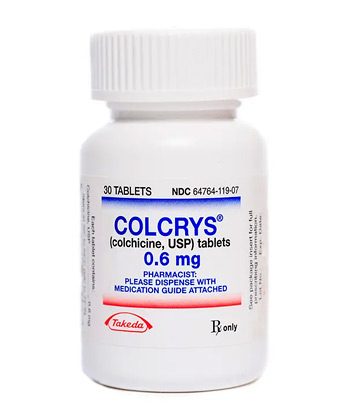
Colcrys
- Colcrys (colchicine) is supplied through pharmacies and authorized online vendors in Canada and internationally; however, it is a prescription-only medication in regulated markets—always obtain it with a valid prescription (some sellers may claim to supply without a prescription, which is not recommended and may be illegal or unsafe).
- Colchicine is used to treat acute gout flares, prevent recurrent gout attacks, treat Familial Mediterranean Fever (FMF), and for certain cardiovascular secondary-prevention indications; it works by binding to tubulin and inhibiting microtubule polymerization, reducing neutrophil activation, chemotaxis and inflammasome-mediated inflammation.
- Usual adult dosages: acute gout — 1.2 mg at onset then 0.6 mg 1 hour later (do not exceed labelled limits; effective single-dose regimens total commonly 1.8 mg); prophylaxis — 0.6 mg once or twice daily; FMF — typically 1.2–2.4 mg/day in divided doses (children ≥4 years start 0.6–1.2 mg/day and titrate); cardiovascular studies used 0.5 mg once daily. Dose adjustments required for renal/hepatic impairment and elderly patients.
- Administered orally as tablets (0.6 mg film-coated tablets), capsules (0.6 mg), or an oral solution (0.6 mg/5 mL).
- Onset: symptomatic benefit for acute gout is often seen within 12–24 hours after oral dosing; anti-inflammatory effects may begin sooner at the cellular level.
- Duration of action: clinical effects commonly persist 24–72 hours after dosing; colchicine accumulates intracellularly and prophylactic effects require daily dosing to maintain benefit.
- Alcohol warning: avoid excessive alcohol while taking colchicine — alcohol can worsen gastrointestinal and hepatic side effects and may increase risk of complications; moderate consumption should be discussed with your prescriber.
- The most common side effects are gastrointestinal, especially diarrhoea, nausea, vomiting and abdominal pain; other common effects include fatigue, myalgia and headache (serious toxicity can cause bone marrow suppression and multi-organ failure and requires urgent care).
- Would you like to try Colcrys without a prescription?
Basic Colcrys Information
- INN (International Nonproprietary Name): Colchicine.
- Brand Names Available In Canada (English): Marketed in Canada as colchicine (generic); notable international brands include Colcrys, Gloperba, Mitigare and Lodoco.
- ATC Code: M04AC01.
- Forms & Dosages: Tablet 0.6 mg (example brands Colcrys, Lodoco); Capsule 0.6 mg (Mitigare); Oral solution 0.6 mg/5 mL (Gloperba).
- Manufacturers In Canada (English): Not specified in the supplied product data; global suppliers include URL Pharma (Colcrys), Hikma and Prasco, and multiple EU generics such as Teva and Zentiva.
- Registration Status In Canada (English): Colchicine is approved in Canada for gout and familial Mediterranean fever and is a prescription product.
- OTC / Rx Classification: Prescription only (Rx) in all regulated markets listed.
- Standard Dosages Per Condition: Acute gout flare: 1.2 mg at onset then 0.6 mg 1 hour later (max 1.8 mg in 1 hr). Gout prophylaxis: 0.6 mg once or twice daily. FMF: 1.2–2.4 mg/day in divided doses; paediatric FMF (≥4 years) start 0.6–1.2 mg/day and titrate.
- Dosage Adjustments: Reduce dose in elderly and in moderate renal or hepatic impairment; avoid in severe renal failure/dialysis and in severe hepatic impairment.
- Storage And Transport: Store at 20–25°C; protect from moisture; do not freeze oral solutions.
Latest Research Highlights
Worried about whether colchicine still has a role given new studies?
Recent Canadian and international evidence from 2022 through mid‑2024 continues to refine colchicine’s place in practice.
Meta‑analyses and randomised trials support low‑dose colchicine (0.5–0.6 mg daily) for secondary cardiovascular risk reduction and for gout prophylaxis in chronic use.
Randomised trials for acute gout now favour limited single‑day colchicine regimens because higher early cumulative dosing raises gastrointestinal adverse events.
Canadian pharmacoepidemiology reports from provincial databases highlighted hospital presentations with colchicine toxicity when combined with CYP3A4 or P‑glycoprotein (P‑gp) inhibitors, particularly in older adults with polypharmacy.
Regulatory bodies including the FDA, EMA and Health Canada have issued safety communications between 2022 and mid‑2024 warning of fatal toxicity risk when colchicine is used with interacting drugs or in severe renal/hepatic impairment.
Emerging paediatric Familial Mediterranean Fever (FMF) series in patients aged four years and up show efficacy with cautious upward titration for refractory cases to total daily doses in the 1.2–2.4 mg range, aligning with observed real‑world dosing.
| Trial | Population | Dose | Primary Outcome | Key Safety Signal |
|---|---|---|---|---|
| Cardiovascular Meta‑Analyses (2022–2024) | Secondary prevention post‑MI | 0.5–0.6 mg daily | Reduction in inflammatory markers and MACE | Increased GI events; interaction risks with CYP3A4/P‑gp inhibitors |
| Acute Gout RCTs | Adults with acute gout | Single‑day strategy: 1.2 mg then 0.6 mg 1 hr later | Faster pain relief vs placebo/older regimens | Higher early cumulative dosing → more diarrhoea, vomiting |
| Paediatric FMF Series | Children ≥4 years with FMF | 0.6–1.2 mg start; titrate up to 1.2–2.4 mg/day | Reduced attack frequency | Tolerability concerns at higher doses; monitoring required |
Patient‑centred Canadian studies stress early pharmacist review for interactions and note rural delays to specialist care that can affect safe initiation and monitoring.
Clinical Effectiveness In Canada
Want to know how colchicine performs in everyday Canadian practice?
Health Canada monographs, provincial formularies and real‑world outcomes show colchicine (ATC M04AC01) is approved in Canada for gout and FMF and appears on many provincial formularies as generics with DINs.
Effectiveness in Canadian practice mirrors international RCT evidence: low‑dose regimens reduce gout flare frequency and can modestly lower post‑MI inflammation markers when used for secondary cardiovascular risk reduction.
For acute gout management, single‑day colchicine strategies starting early reduce pain and overall adverse events compared with older multi‑day high‑dose approaches.
Pharmacovigilance data in provincial databases indicate tolerability—especially diarrhoea—is the main limitation, while interaction‑related serious events occur mostly in elderly or renal‑impaired patients.
- Health Canada Monograph (Key Points): Approved for gout and FMF; dose reduction advised in renal/hepatic impairment; avoid with strong CYP3A4/P‑gp inhibitors in high‑risk patients.
- Typical DIN Handling: Generic colchicine products are distributed with DINs; pharmacists should verify DIN before dispensing for coverage.
- Provincial Formulary Examples: Ontario Drug Benefit (ODB), BC PharmaCare, Régie de l'assurance maladie du Québec (RAMQ) list colchicine with coverage criteria and possible prior authorisation for higher FMF doses.
Pharmacists at Shoppers Drug Mart, Rexall and community clinics play a key role checking DINs, counselling on dosing and bilingual labelling, and screening for interactions and renal function.
Indications And Expanded Uses
What is colchicine approved for, and when is it used off‑label?
Regulatory approvals internationally and in Canada cover acute gout, gout prophylaxis and familial Mediterranean fever.
Some jurisdictions have approved low‑dose colchicine for secondary cardiovascular prevention (for example, Lodoco formulations outside the USA), though Health Canada‑approved indications in Canada remain gout and FMF.
Off‑label use occurs for pericarditis recurrence prevention and certain peri‑procedural inflammatory syndromes, with moderate RCT support for recurrent pericarditis and lower‑quality evidence for some other inflammatory uses.
| Indication | Typical Adult Dose | Canadian Approval Status |
|---|---|---|
| Acute Gout | 1.2 mg then 0.6 mg 1 hour later (max 1.8 mg in 1 hr) | Approved |
| Gout Prophylaxis | 0.6 mg once or twice daily | Approved |
| Familial Mediterranean Fever (FMF) | 1.2–2.4 mg/day in divided doses | Approved |
| Recurrent Pericarditis | Low‑dose regimens (various) | Off‑label; moderate evidence |
Acute gout label dosing patterns match the standard 1.2 mg then 0.6 mg 1 hour later, with prophylaxis at 0.6 mg daily or twice daily and paediatric FMF dosing starting at 0.6–1.2 mg/day in children over four years.
When prescribing in bilingual clinics, clearly explain approved versus off‑label use and obtain informed consent where specialist access is limited, particularly in Indigenous and remote communities.
Composition And Brand Landscape
Which colchicine products are available and what should patients expect?
Colchicine is marketed worldwide under the INN colchicine, and in the US under brands such as Colcrys (0.6 mg tablet), Gloperba (oral solution), Mitigare (capsule) and Lodoco for cardiovascular use.
In Canada, colchicine is usually supplied as generics in 0.6 mg strength tablets or capsules and sometimes as oral solution; the 0.6 mg strength is the most common.
- Common Formulations: Tablet 0.6 mg (Colcrys, Lodoco); Capsule 0.6 mg (Mitigare); Oral solution 0.6 mg/5 mL (Gloperba).
- Packaging And DINs: Manufacturers use different DINs and packaging—verify DIN for interchangeability and provincial reimbursement.
Pharmacies such as Shoppers Drug Mart, Jean Coutu, London Drugs and Rexall commonly stock generic colchicine; check the product monograph and DIN when substituting brands.
Contraindications And Special Precautions
Who should not take colchicine, and what monitoring is needed?
Absolute contraindications include hypersensitivity to colchicine, severe renal or hepatic impairment (especially when combined with strong CYP3A4 or P‑gp inhibitors), and concomitant use with potent inhibitors in patients with renal or hepatic dysfunction because of fatal toxicity risk.
Relative contraindications and populations requiring caution include elderly or frail patients, those with severe gastrointestinal or hematological disease, and patients with moderate renal or hepatic impairment.
- Monitoring Alerts: Baseline and periodic CBC, liver function tests and renal function are advised for long‑term use.
- Key Toxicities: Gastrointestinal toxicity (diarrhoea, nausea, vomiting), bone marrow suppression, myopathy and rare alopecia.
Pharmacists should review medication profiles for elderly, frail and Indigenous patients with comorbidities before dispensing, checking ODB/PharmaCare claims and advising dose adjustments or alternatives where needed.
Stop colchicine and seek medical attention for severe diarrhoea, unexplained muscle pain or weakness, signs of infection, bruising or bleeding, or any neurological changes.
Dosage Guidelines
How much colchicine should be taken for each condition and how is dosing adjusted?
For adults with acute gout, use the single‑day strategy of 1.2 mg at onset then 0.6 mg one hour later (maximum 1.8 mg in one hour), or 0.6 mg every 12–24 hours thereafter based on tolerability.
For prophylaxis, the usual regimen is 0.6 mg once or twice daily depending on response and side effects.
FMF dosing in adults typically ranges from 1.2 to 2.4 mg per day in divided doses, while paediatric patients aged four years and older start at 0.6–1.2 mg/day and titrate cautiously to effect.
| Indication | Adult Dose | Paediatric Notes | Renal/Hepatic Adjustment |
|---|---|---|---|
| Acute Gout | 1.2 mg then 0.6 mg 1 hr later (max 1.8 mg in 1 hr); then 0.6 mg q12–24h as needed | Not approved for gout in children | Reduce or avoid in moderate/severe renal impairment |
| Gout Prophylaxis | 0.6 mg once or twice daily | Not approved | Reduce dose in renal/hepatic impairment |
| FMF | 1.2–2.4 mg/day in divided doses | ≥4 years: start 0.6–1.2 mg/day, titrate | Higher monitoring; prior authorisation may be required for higher doses |
- Do not double doses after a missed dose; take as soon as remembered unless near the next scheduled dose.
- In overdose, seek immediate medical attention—the risk includes multi‑organ failure and bone marrow suppression.
Interactions Overview
Which drugs and foods increase colchicine risk?
Colchicine is a substrate of CYP3A4 and P‑glycoprotein, so strong inhibitors such as clarithromycin, ketoconazole and certain protease inhibitors substantially raise colchicine exposure and the risk of severe toxicity.
Other high‑risk interacting drugs include cyclosporine and verapamil; moderate‑risk agents require caution, dose adjustments or monitoring.
- High‑Risk Interacting Drugs: Clarithromycin, ketoconazole, itraconazole, certain protease inhibitors, cyclosporine, verapamil.
- Moderate‑Risk Agents: Some macrolides, moderate CYP3A4 inhibitors and P‑gp inhibitors; monitor and adjust as needed.
| Interaction | Mechanism | Practical Action |
|---|---|---|
| Clarithromycin | Strong CYP3A4/P‑gp inhibition | Avoid combination; if unavoidable, stop colchicine or alter therapy and monitor closely |
| Verapamil | P‑gp inhibition and CYP3A4 interaction | Consider dose reduction and monitor for myopathy |
| Grapefruit Juice | CYP3A4 inhibition | Advise patients to avoid grapefruit/grapefruit juice while taking colchicine |
Patients should provide a full list of prescription, OTC and herbal products to their pharmacist to reduce the chance of dangerous interactions.
Cultural Perceptions And Patient Habits
What do Canadian patients worry about when prescribed colchicine?
Common concerns in patient forums and community groups include diarrhoea and other side effects, fear of drug interactions, and questions on cost and access.
Indigenous health contexts emphasise culturally safe prescribing, the need for plain‑language explanations and the role of community health workers in supporting adherence and monitoring.
- Common Patient Concerns: Side effects (particularly diarrhoea), long‑term safety, cost and bilingual labelling in English and French.
- Practical Strategies: Provide plain‑language bilingual leaflets, involve pharmacists for medication reconciliation and offer telephone follow‑up for remote communities.
Some Canadians compare US brand availability and pricing (for example Colcrys) with domestic generics, which influences buying decisions and occasional cross‑border considerations.
Availability And Pricing Patterns
How easy is it to get colchicine in Canada and what does it cost?
Colchicine 0.6 mg formulations are widely available at community pharmacies across Canada, mainly as generics with DINs assigned to each product.
Typical retail prices vary by province, brand and dispenser, and some provincial formularies require prior authorisation for higher FMF doses.
| Item | Typical Price Range (Approx.) | Provincial Coverage / Prior Authorisation |
|---|---|---|
| Colchicine 0.6 mg tablets (generic) | Varies by province and pack size | Listed on many formularies; higher FMF doses may need prior authorisation |
| Colchicine oral solution 0.6 mg/5 mL | Less commonly stocked; price varies | Coverage varies; check DIN for reimbursement |
Our online pharmacy offers Colcrys availability without a prescription and discreet delivery across Canada in 5–14 days, subject to provincial regulations and verification of patient eligibility for coverage.
Major chains (Shoppers, Rexall, Jean Coutu, London Drugs) usually stock colchicine, but rural clinics may have limited supply and longer waits for special orders.
Store colchicine at 20–25°C and avoid freezing during transport to protect stability.
Comparable Medicines And Preferences
What are the main alternatives to colchicine for gout and when are they preferred?
For acute gout, NSAIDs such as naproxen or indomethacin and corticosteroids are commonly used alternatives that provide rapid symptom relief.
For prophylaxis and flare reduction, urate‑lowering therapies such as allopurinol and febuxostat address uric acid burden rather than acute inflammation.
| Medicine | Pros | Cons |
|---|---|---|
| Colchicine | Oral, effective for prophylaxis and acute gout when dosed correctly; cheap generics | Narrow therapeutic index; significant drug interactions and GI adverse effects |
| NSAIDs (Naproxen) | Rapid pain relief for acute gout | Not suitable in renal impairment, heart failure or peptic ulcer disease |
| Corticosteroids | Effective when NSAIDs contraindicated | Systemic effects with prolonged use |
| Biologics (Anakinra) | Option for refractory cases | Expensive and access restricted on formularies |
- Decision Factors: Comorbidities (renal disease), drug interactions, cost, pregnancy and breastfeeding considerations.
- In renal impairment, corticosteroids or adjusted colchicine dosing are often favoured over NSAIDs.
FAQ
Patients often ask practical questions when starting colchicine.
Q1: Can I take colchicine with my statin?
A1: Some statins increase myopathy risk and the combination with colchicine can worsen that risk, particularly in the presence of CYP3A4 or P‑gp inhibitors.
Check with your pharmacist and monitor creatine kinase if the combination is necessary.
Q2: Is colchicine covered by ODB/PharmaCare/RAMQ?
A2: Coverage varies by province; many formularies list colchicine but certain strengths or higher FMF doses may need prior authorisation—check the DIN and your provincial drug plan.
Q3: What if I miss a dose?
A3: Take the missed dose as soon as you remember unless it is almost time for the next dose; do not double up.
Q4: Can children take colchicine?
A4: Colchicine is approved for FMF in children aged four years and older with specific paediatric dosing; it is not approved for acute gout in children.
Q5: How can I avoid severe interactions?
A5: Give a complete medication list (prescription, OTC, herbal and foods like grapefruit) to your pharmacist and avoid strong CYP3A4/P‑gp inhibitors while taking colchicine.
| Provincial Contact Point | Where To Check |
|---|---|
| Ontario Drug Benefit (ODB) | Provincial formulary listings and pharmacist inquiry |
| BC PharmaCare | PharmaCare policy and DIN verification |
| RAMQ (Québec) | RAMQ reimbursement rules and prior authorisation details |
Guidelines For Proper Use
How can clinicians and pharmacists minimise harm and maximise benefit?
Follow the Health Canada monograph, product monographs and provincial guidance, using the lowest effective dose and scheduling regular monitoring for long‑term users.
- Pharmacist Checklist: Verify DIN, assess renal and hepatic function, screen for CYP3A4/P‑gp inhibitors, counsel on GI effects and emergency signs.
- Remote/Indigenous Communities: Use telepharmacy, bilingual materials and collaborate with community health nurses to ensure monitoring and adherence.
| Monitoring | Schedule |
|---|---|
| Baseline CBC, renal function, LFTs | At baseline prior to chronic therapy |
| Short‑term follow‑up | 1 month after initiation |
| Ongoing monitoring | Every 3–6 months depending on dose and comorbidities |
Red flags requiring immediate reassessment include severe diarrhoea, new muscle weakness or pain, fever with sore throat, unexplained bruising or bleeding.
Document counselling, check provincial drug plan rules for refill and prior authorisation requirements, and ensure patients know storage instructions (20–25°C).
Delivery Across Canada (English)
| City | Region | Delivery Time |
|---|---|---|
| Toronto | Ontario | 5–7 days |
| Montreal | Quebec | 5–7 days |
| Vancouver | British Columbia | 5–7 days |
| Calgary | Alberta | 5–7 days |
| Edmonton | Alberta | 5–7 days |
| Ottawa | Ontario | 5–7 days |
| Winnipeg | Manitoba | 5–7 days |
| Halifax | Nova Scotia | 5–7 days |
| Victoria | British Columbia | 5–7 days |
| Regina | Saskatchewan | 5–9 days |
| Saskatoon | Saskatchewan | 5–9 days |
| St. John's | Newfoundland and Labrador | 5–9 days |
| Charlottetown | Prince Edward Island | 5–9 days |