
Domperidone
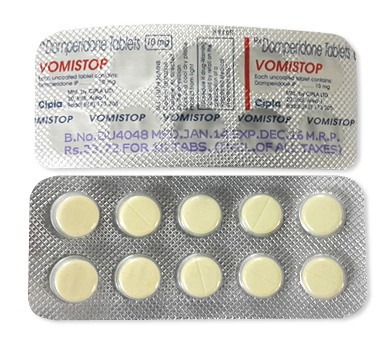
Domperidone
- In some pharmacies and online listings, domperidone may be available without a prescription, depending on the country and local regulations; however, in Canada it is generally prescription-only and monitored due to cardiac risk.
- Domperidone is used to relieve nausea and vomiting and may also be used for dyspepsia or delayed gastric emptying. It works by blocking dopamine D2 receptors, helping the stomach and upper intestine move more efficiently and reducing the feeling of nausea.
- The usual adult dose is 10 mg taken up to 3 times daily, typically before meals. Doses and duration may be lower or more restricted in older adults, and use in children should follow medical advice.
- The form of administration is a tablet, oral suspension, or oral drops; in some regions, suppositories may also exist.
- The effect of domperidone usually begins within about 30 to 60 minutes after taking it.
- The duration of action is usually about 4 to 6 hours.
- Alcohol should be avoided or limited, as it may worsen side effects such as dizziness and stomach upset.
- The most common side effects are dry mouth, headache, abdominal cramps, and sometimes diarrhea or dizziness.
- Would you like to try domperidone without a prescription?
Basic Domperidone Information
- INN (International Nonproprietary Name): Domperidone
- Brand names available in Canada (English): Motilium
- ATC Code: A03FA03
- Forms & dosages: Tablet, 10 mg; oral suspension, 1 mg/mL; oral drops, 1 mg/mL
- Manufacturers in Canada (English): Janssen-Cilag, Teva Pharma, Sandoz, Sanofi
- Registration status in Canada (English): Prescription-only, restricted and monitored due to cardiac risk
- OTC / Rx classification: Prescription Only (Rx) in most countries
Latest Research Highlights
What has the recent domperidone research actually shown for Canadian patients dealing with nausea treatment or gastroparesis symptoms?
From a Canadian lens, the key message is still consistent: domperidone can help some patients with nausea and vomiting, but Health Canada safety concerns remain central because of QT prolongation and arrhythmia risk.
Recent reviews and real-world data from 2022 to 2025 keep pointing to dose-related cardiac risk, especially at higher doses and in older adults, which is why Canada guidelines still treat domperidone as prescription-only.
That matters when reading the latest domperidone evidence, because a drug that is restricted in Canada is usually being used in a more selected group than in countries with wider access.
| Study Type | Population | Main Outcome | Relevance to Canadian Practice |
|---|---|---|---|
| Recent review data | Adults treated for nausea and gastroparesis | Symptom relief seen in some patients, balanced by cardiac risk | Supports careful, short-course use only |
| Real-world observational data | Older adults and patients with comorbidities | Higher risk of QT prolongation and arrhythmia at higher doses | Reinforces screening before prescribing |
| Regulatory review updates | Mixed patient populations | Restrictions on dose and duration remain in place | Matches Canadian prescription caution |
| Antiemetic research reviews | Patients with functional GI symptoms | Benefit in selected cases, not universal response | Encourages comparison with safer alternatives |
Data highlight: The dominant safety theme in current guidance is short-course, lowest effective dose.
Internationally, EMA and MHRA-style restrictions echo the same approach, with prescription-only access and limits on duration.
For Canadian practice, that means domperidone safety is always part of the conversation, even when a patient reports it worked well before.
Clinical Effectiveness In Canada
How does domperidone fit into everyday Canadian pharmacy practice?
In Canada, domperidone is used as a prescription drug, and the Drug Identification Number, or DIN number, is what helps pharmacists and prescribers confirm the exact product.
The Health Canada monograph and the DIN lookup process matter because patients may see the name Motilium Canada online and assume access means approval for any use, when in fact prescribing restrictions still apply.
Pharmacists also compare domperidone effectiveness with safer alternatives, especially when provincial formulary rules may affect what is covered or how easily follow-up refills can be obtained.
Coverage can vary by province, and that can shape choices in the real world just as much as the clinical evidence does.
- Commonly considered for nausea and vomiting when a prescriber decides the benefit outweighs the risk.
- Sometimes used for symptom relief in dyspepsia or other functional gastrointestinal complaints.
- May be selected when a patient has responded before and needs a familiar option.
- Often reviewed against other antiemetic or GI motility options before it is renewed.
Data highlight: Domperidone can be effective for some patients, but in Canada it should usually be used cautiously and for a short time.
That expectation can surprise patients who are used to universal healthcare and think access automatically means broad approval.
In practice, access through Ontario Drug Benefit, BC PharmaCare, or RAMQ may influence the conversation, while private coverage can differ from one plan to the next.
Indications And Expanded Uses
Which domperidone uses are straightforward, and which ones need a closer look?
The main evidence-backed uses are nausea and vomiting, plus symptom relief in functional gastrointestinal disorders such as dyspepsia.
Some uses seen in practice are off-label and should be reviewed case by case, especially if the person has cardiovascular risk factors.
Canadian clinicians usually weigh symptom severity, prior response, and cardiac risk before prescribing Motilium tablets or oral solution.
- Approved use
- Evidence-backed treatment for nausea and vomiting, with use in Canada kept under prescription control.
- Off-label use
- Use outside the main labelled purpose, including some functional GI symptom management, decided individually by the prescriber.
- When to avoid
- When the cardiac risk profile is high, or when interacting medicines and monitoring barriers make treatment unsafe.
Shared decision-making matters in Canada, especially for newcomers, older adults, and rural patients who may not have easy access to a specialist.
Bilingual counselling also matters, because a patient who understands the instructions is more likely to use domperidone safely and correctly.
Composition And Brand Landscape
What is actually in the box, and why do the brand names vary so much from one country to another?
The International Nonproprietary Name is domperidone, and the ATC code is A03FA03, which places it among drugs for functional gastrointestinal disorders and antiemetics.
In Canada, the best-known brand is Motilium, usually in 10 mg tablet form or as an oral solution.
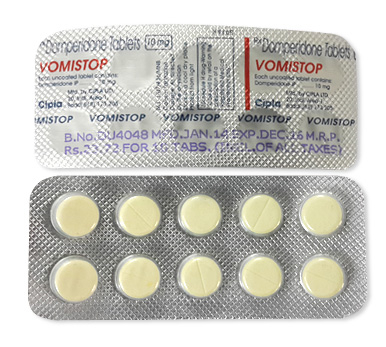
Outside Canada, the same medicine may appear as Domstal, Vomistop, Emidon, Peridys, or Domecid, depending on the market.
| Brand Name | Typical Dosage Form | Region Example |
|---|---|---|
| Motilium | 10 mg tablets, oral solution | Canada, global markets |
| Domstal | 10 mg tablets, oral drops, suspensions | India and other markets |
| Vomistop | 10 mg tablets, oral drops, suspensions | Asia and Africa |
| Peridys | 10 mg tablets, oral solutions | Europe |
| Domecid | 10 mg tablets, oral solutions | Europe |
Canadian packaging can vary by pharmacy chain or wholesaler, and that is one reason bilingual labelling matters so much for patient understanding.
Generics may also appear under different manufacturer names, but the DIN helps confirm the product and formulation before dispensing.
Contraindications And Special Precautions
What makes domperidone a medication that needs screening before it is started?
The strongest safety message is simple: domperidone can increase cardiac risk in susceptible patients, so prescribers should check carefully for contraindications and interacting medicines.
Known QT prolongation, significant heart disease, electrolyte imbalance, and certain drug combinations are the main issues that raise concern.
Older adults and people taking multiple medications need extra care because the chance of overlap with QT risk medications is higher.
That can be especially important in communities where follow-up is harder to arrange, including some Indigenous and rural patients, where appointment availability may be limited even within a universal healthcare system.
- Known QT prolongation or a history of rhythm problems.
- Significant heart disease or prior arrhythmia concerns.
- Electrolyte imbalance that could increase heart rhythm risk.
- Concomitant medicines that interact or affect cardiac safety.
- Older age, polypharmacy, or limited access to follow-up monitoring.
Data highlight: Lowest effective dose, shortest duration.
That principle is the safest way to think about Motilium warning language in Canadian practice.
Dosage Guidelines
How much domperidone is usually taken, and what does a Canadian pharmacist look for at the counter?
For nausea and vomiting or dyspepsia, the usual adult dose is 10 mg three times daily.
For children over 12 years or over 35 kg, dosing should be clinician-directed and limited by safety concerns.
Canadian prescribers generally keep treatment short and avoid exceeding recommended limits.
| Patient Group | Usual Dose | Timing | Practical Note |
|---|---|---|---|
| Adults | 10 mg three times daily | Before meals is common | Use the shortest effective course |
| Children over 12 years or over 35 kg | Clinician-directed | As prescribed | Safety limits are especially important |
Missed doses should not be doubled without advice from a pharmacist or prescriber.
Renal status, hepatic status, age, and concurrent medications may influence how cautiously the medicine is used.
Provincial drug plans do not set the dose, but they can affect how easily a patient obtains follow-up refills.
Interactions Overview
Why do pharmacists ask so many questions before domperidone is handed out?
Because domperidone interactions can be clinically important, especially when another medicine raises cardiac risk or changes drug metabolism.
That is why a pharmacy counselling check at pickup is so common in Canada, including at Shoppers Drug Mart, Rexall, Jean Coutu, and London Drugs.
- Other medicines that can affect QT prolongation or rhythm risk.
- Drugs that change metabolism and may increase domperidone exposure.
- Multiple prescription medicines taken together in older adults.
- Alcohol, which should be discussed cautiously if nausea or dizziness are present.
| Interaction Type | Why It Matters | What To Ask Your Pharmacist |
|---|---|---|
| QT risk medications | Can increase the chance of rhythm problems | “Is this safe with my heart medicine?” |
| Metabolism interactions | Can raise domperidone levels | “Do any of my prescriptions interfere?” |
| Alcohol | May worsen dizziness or nausea | “Should I avoid alcohol while taking this?” |
Food is usually not the main issue, although taking it before meals is common in practice.
Cultural Perceptions And Patient Habits
What do Canadian patients usually ask when domperidone comes up in conversation?
In community forums and Reddit Canada-style discussions, the same questions appear again and again: does it work fast, is it safe with heart issues, and will my drug plan cover it?
Canadian patients often value universal healthcare and are understandably cautious about medicines with cardiac warnings.
People in rural areas may also worry about restocking delays, while patients in Quebec or bilingual settings may need clear bilingual labelling and counselling to feel confident using the medicine correctly.
Chain pharmacies can be convenient, but independents sometimes offer more time for counselling and follow-up.
- Some people expect domperidone to work quickly and assume faster is always better.
- Some assume a foreign brand is easier to get than Canadian domperidone, even when safety oversight is stricter here.
- Some worry that heart warnings mean the drug should never be used, when the real issue is careful patient selection.
- Some compare Canadian access with US restrictions and assume cross-border options are automatically better.
Canadian oversight is usually more conservative for a reason, especially when the concern is QT prolongation and arrhythmia risk.
Availability And Pricing Patterns
Where can patients actually get domperidone in Canada, and why does the price seem to change so much?
Domperidone is prescription-only in Canada and usually dispensed under a DIN through major chains such as Shoppers Drug Mart, Rexall, Jean Coutu, and London Drugs, as well as independent pharmacies.
Coverage varies by province and plan, including Ontario Drug Benefit, BC PharmaCare, and RAMQ.
In our online pharmacy, domperidone is available without a prescription, with discreet delivery to Canada in 5-14 days.
| Access Factor | What Patients Usually Notice | Common Barrier |
|---|---|---|
| Retail pharmacy Canada | Fast local pickup when in stock | Prescription required |
| Online Canadian pharmacy | Convenient ordering and home delivery | Delivery timing and stock status |
| Provincial drug plan | Possible coverage support | Rules differ by province |
| Cross-border comparison | US access is less routine because the FDA does not approve it for routine use | Different regulatory limits |
Rural patients may face restocking delays or fewer oral solution options, which can make planning ahead important.
Motilium price Canada can also vary because private plans, pharmacy supply, and provincial rules do not line up perfectly.
Comparable Medicines And Preferences
What do Canadian prescribers consider when domperidone is not the best fit?
Alternatives depend on the symptom, the patient’s risk profile, and the prescriber’s judgement.
Some patients prefer domperidone because it feels familiar and has helped before, while others prefer options with fewer cardiac concerns or more established monitoring pathways.
| Medicine | Common Use | Strengths / Route | Key Pros / Cons |
|---|---|---|---|
| Domperidone | Nausea, vomiting, dyspepsia | 10 mg tablet, oral solution | Helpful for some; cardiac caution needed |
| Other antiemetic options | Nausea relief | Various strengths and routes | Choice depends on cause and tolerance |
| GI motility options | Motility-related symptoms | Prescription-specific | May fit certain patients better than domperidone |
Choice may also depend on age, DIN-based availability, and provincial coverage.
For some patients, the question is not “Which drug is strongest?” but “Which one fits the symptoms and the safety profile best?”
Frequently Asked Questions
Is domperidone available in Canada without a prescription?
No, domperidone is prescription-only in Canada because of cardiac risk concerns.
Why did my pharmacist ask about my heart medications?
Some medicines increase QT prolongation risk or interact with domperidone, so a medication review is important.
Is Motilium covered by my drug plan?
Coverage depends on the province and the plan, so Ontario Drug Benefit, BC PharmaCare, and RAMQ may differ.
Can I use domperidone with other nausea medicines?
That depends on the other medicine, since some combinations raise safety concerns and should be checked first.
Why is the dose limited?
The dose is limited because the safest pattern is the lowest effective dose for the shortest duration.
Guidelines For Proper Use
What should patients do once domperidone is prescribed?
Use it exactly as prescribed and keep the course as short as possible.
Report palpitations, dizziness, fainting, or new heart symptoms right away.
Review all medications before starting, including prescriptions, over-the-counter products, and supplements.
That advice is especially important for people with heart conditions or those taking interacting drugs.
- Do take domperidone exactly as directed.
- Do ask the pharmacist to review interactions before the first dose.
- Do ask for the DIN if there is any question about the product.
- Do confirm bilingual instructions if that helps with safe use.
- Do check provincial formulary coverage before refills.
- Do not exceed the prescribed dose.
- Do not ignore palpitations, dizziness, or fainting.
- Do not assume a previous good response means it is safe for everyone.
Data highlight: The key safety message is lowest effective dose, shortest effective course, with monitoring when risk is higher.
Delivery Across Canada (English)
| City | Region | Delivery time |
|---|---|---|
| Toronto | Ontario | 5-7 days |
| Ottawa | Ontario | 5-7 days |
| Mississauga | Ontario | 5-7 days |
| Vancouver | British Columbia | 5-7 days |
| Victoria | British Columbia | 5-7 days |
| Calgary | Alberta | 5-7 days |
| Edmonton | Alberta | 5-7 days |
| Winnipeg | Manitoba | 5-7 days |
| Quebec City | Quebec | 5-7 days |
| Montreal | Quebec | 5-7 days |
| Halifax | Nova Scotia | 5-7 days |
| Regina | Saskatchewan | 5-9 days |
| Saskatoon | Saskatchewan | 5-9 days |
| St. John’s | Newfoundland and Labrador | 5-9 days |
| Charlottetown | Prince Edward Island | 5-9 days |